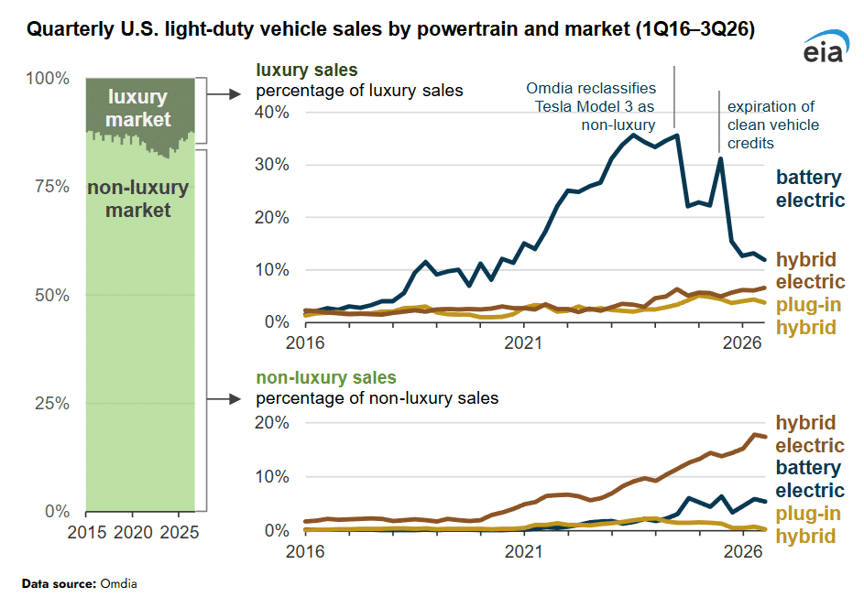

According to the U.S. Energy Information Administration (EIA), hybrid, battery electric, and plug-in hybrid vehicles accounted for 23% of new light-duty vehicle sales in the third quarter of 2026, down from 24% a year earlier. Hybrid vehicles rose to 16%, while battery electric vehicles (BEVs) fell to 6% and plug-in hybrid electric vehicles (PHEVs) fell to 0.7%.

The EIA reports that federal clean vehicle tax credits expired in September 2025, coinciding with declining electric vehicle sales. BEV market share fell from 8% in the first nine months of 2025 to 6% in the same period of 2026. In the luxury vehicle segment, BEVs’ share dropped from 31% to 12% year over year. Rising new vehicle prices, with the average transaction price exceeding $50,000, may also be slowing hybrid sales growth.
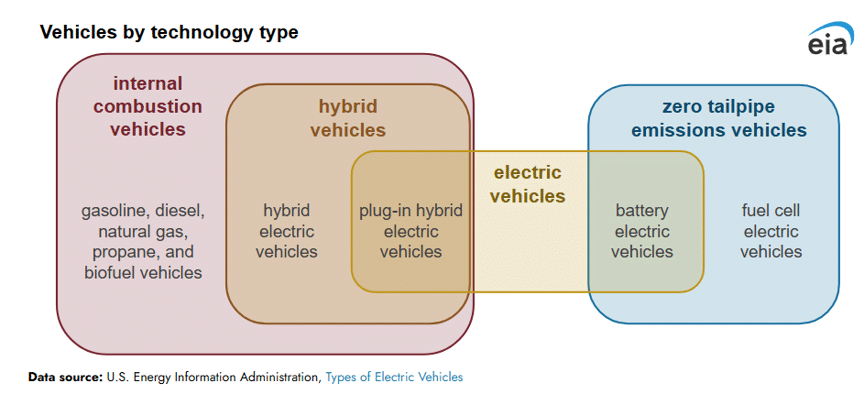
These trends have different implications for the energy sector. BEVs and PHEVs increase electricity demand, while conventional hybrids continue to consume liquid fuels. According to the EIA, electric vehicles accounted for just 2% of registered U.S. light-duty vehicles in 2024, indicating that their overall impact on transportation energy demand remains relatively limited.