
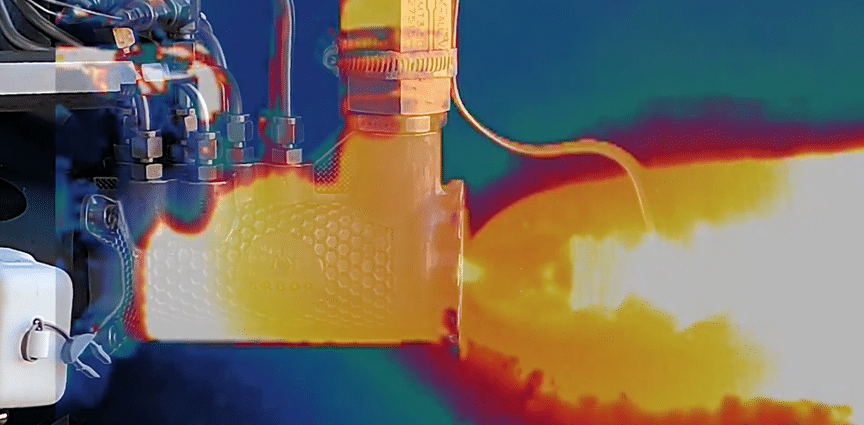
A startup founded by former SpaceX engineers, Arbor Energy, has raised $55 million to develop natural gas–powered technology that provides always-on, carbon-free electricity, with the long-term goal of powering AI data centers, according to Bloomberg. The system uses rocket-inspired technology to combust fuel with oxygen, producing supercritical CO2 to spin turbines, which is then captured and stored. The Series A funding will support a 1 MW pilot unit and a 25 MW commercial system, planned for Los Angeles in 2027–2028. Arbor’s turbines can be 3D-printed locally, avoiding supply bottlenecks. While initially biomass-powered and carbon-negative, the system now accommodates natural gas with carbon capture, offering electricity at $70–100 per MWh—potentially cheaper than new natural gas plants. They write:
A startup founded by former SpaceX employees has raised $55 million for technology that runs on natural gas and can provide always-available, carbon-free electricity. The goal: to eventually power artificial intelligence data centers.
Arbor Energy uses rocket-inspired technology that combusts fuel with a stream of oxygen and creates so-called supercritical carbon dioxide — that is, CO2 in a fluid state — it uses to spin a turbine. The CO2 is then captured and stored. […]
Shortages for natural gas turbines — one of the most desired pieces of power equipment in the AI-electric boom — have created an opening for Arbor’s system, said Chief Executive Officer and co-founder Brad Hartwig. While the handful of companies that manufacture natural gas turbine blades are overwhelmed, with years-long backlogs, Arbor’s turbines can be 3D-printed by dozens of local Los Angeles-based suppliers and can be made with common nickel-based alloys, he said.
“The power demand is here, and it’s massive,” said Hartwig.
Biomass absorbs CO2, and burning it and storing the carbon makes the technology carbon negative. […]
The company is planning to build its first commercial unit in 2027 in Los Angeles, with the goal of turning it on in 2028, Hartwig said. Arbor projects this commercial system will be able to generate electricity for $100 per megawatt-hour, and that it can bring costs down to $70 per megawatt-hour. That would be less than electricity generated by a new natural gas plant, according to some estimates.
Read more here.