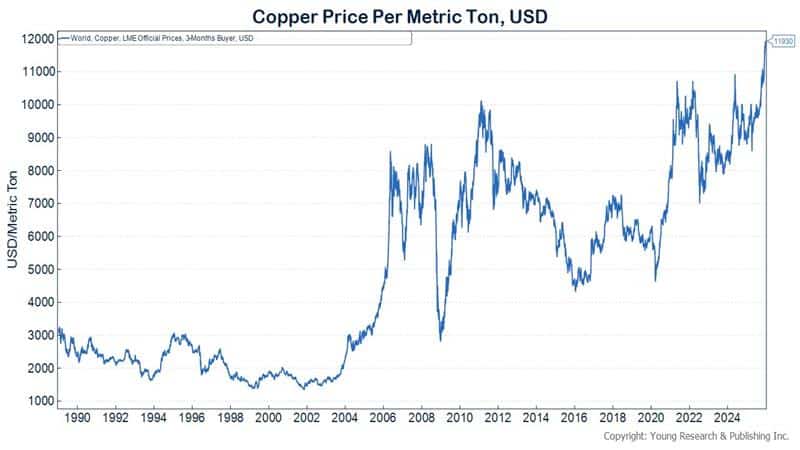
Copper surged to a new all-time high above $12,000 a ton, driven by severe mine outages and trade disruptions, putting the metal on track for its strongest annual gain since 2009. Prices have climbed more than 30% this year as fears of US tariffs sparked a rush of imports, tightening global supply despite weakening demand in China, reports Mark Burton of Bloomberg. Supply disruptions across major mining regions and expectations of a deepening market deficit are reinforcing bullish forecasts, with banks warning that copper could face its most severe shortfall in decades and that prices could rise even further. Burton writes:
Copper hit a fresh all-time high above $12,000 a ton as severe mine outages and trade dislocations linked to US President Donald Trump’s tariff agenda put the crucial industrial metal on course for its biggest annual gain since 2009.
Prices rose as much as 1% to $12,044 a ton on the London Metal Exchange, extending a rally that has lifted prices by more than a third this year. The possibility that Trump will place tariffs on the metal has been a central factor driving prices higher, with a surge in US imports through the year thrusting manufacturers elsewhere into a bidding war to keep hold of supplies. […]
There have been severe disruptions on the supply side too, with outages at mines across the Americas, Africa and Asia prompting warnings that the market is on the cusp of a major deficit that will add further fuel to the rally. Deutsche Bank warns that output from the world’s largest miners will drop 3% this year, and could fall again in 2026. […]
Supply risks have loomed large in the copper industry for years, and feature prominently in bullish forecasts from banks and investors, alongside a projected surge in usage in fast-growing sectors including electric vehicles, renewables and artificial intelligence. Citigroup has advised clients that prices could hit $15,000 in a bull-case scenario where a weakening dollar and US interest-rate cuts further boost copper’s appeal, prompting investors to more aggressively pile in. […]