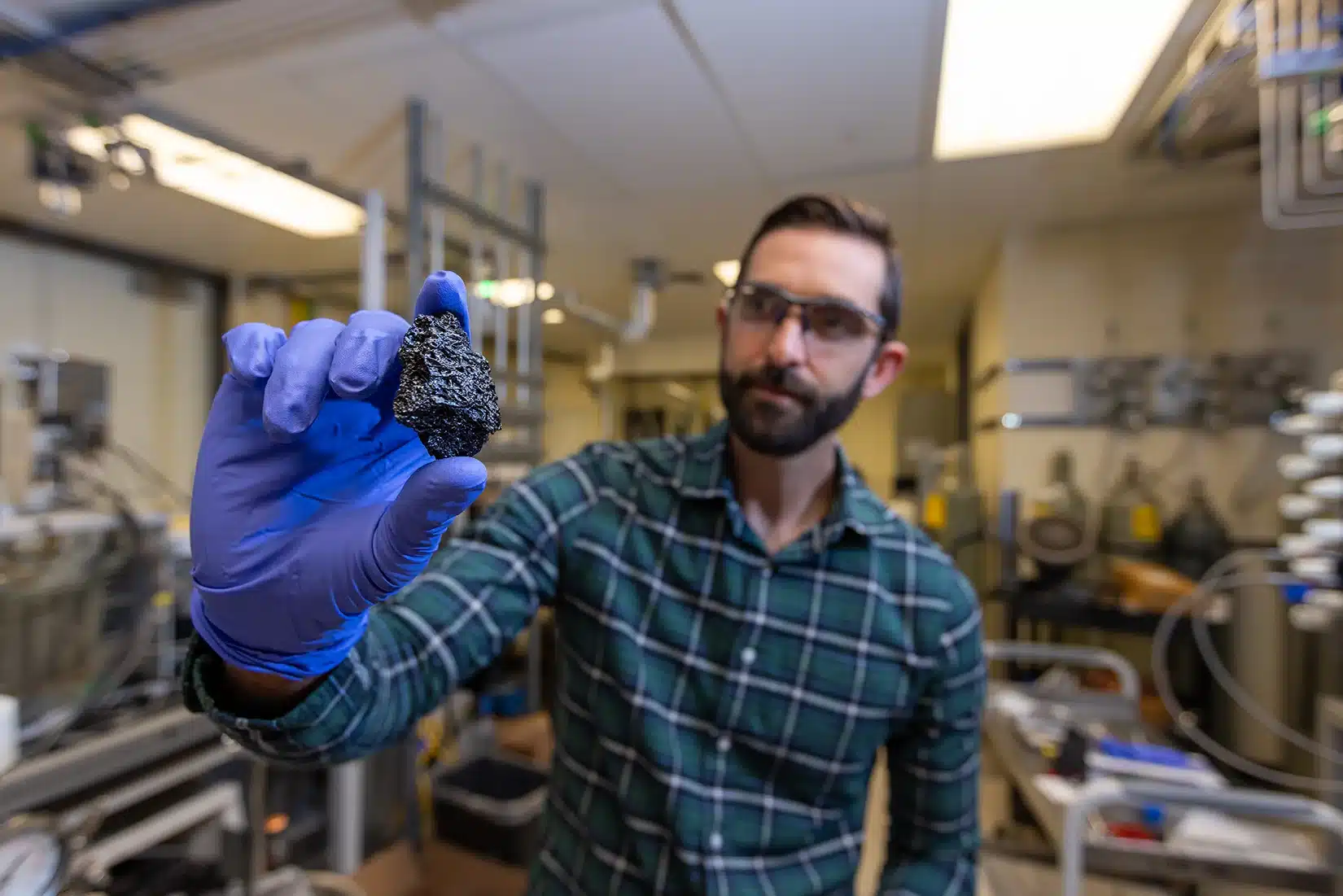
Researchers from the National Laboratory of the Rockies and North Carolina State University have developed a process to turn biomass waste—such as forestry debris and agricultural byproducts—into high-quality, battery-grade graphite, offering a potential domestic alternative to imports from China. Using existing refinery equipment, the method converts pyrolysis oil into graphite while still producing usable fuels like jet fuel and gasoline.
The team also discovered a lower-temperature production pathway, reducing the process from about 3,000°C to as low as 1,500°C, significantly cutting energy costs. With global graphite demand expected to surge, this approach could strengthen U.S. supply chains, lower manufacturing costs, and support energy storage and steel production by transforming waste into a valuable industrial resource. NLR writes:
With global graphite demand projected to grow 70% by 2028 due to a surge in battery and steel production worldwide, the joint research between NLR and NCSU could help U.S. manufacturers boost production of graphite at an opportune time. […]
“These processes really have the capability to scale up to meet our future graphite needs,” Farberow said. “With some investment into industrial capabilities, American manufacturing could get the boost it needs.”
Read more here.