

The Producer Price Index (PPI) rose 0.7% in February, marking the fastest monthly increase in several months and pushing annual producer inflation to 3.4%, the US Bureau of Labor Statistics reported. The rise was driven mainly by higher service costs (up 0.5%) and a sharp increase in goods prices (up 1.1%), especially food and energy.
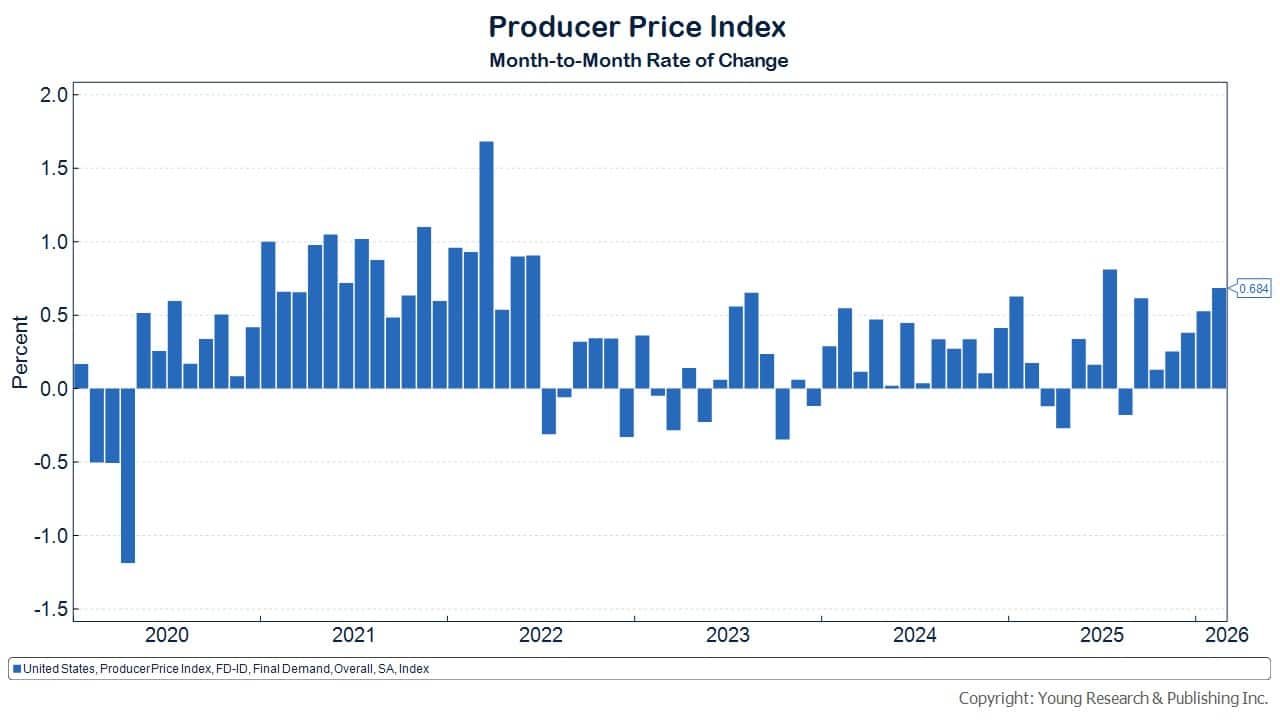
Food prices—particularly vegetables and eggs—and energy costs like diesel and gasoline were major contributors, while some sectors such as retail apparel and airline services declined. Core producer prices (excluding food, energy, and trade) also continued to climb, highlighting persistent underlying inflation pressures. The BLS writes:
The Producer Price Index (PPI) for final demand increased 0.7 percent in February, seasonally adjusted, the U.S. Bureau of Labor Statistics reported today. Final demand prices moved up 0.5 percent in January and 0.4 percent in December 2025 (see Table A). On an unadjusted basis, the index for final demand rose 3.4 percent for the 12 months ended in February, the largest 12-month advance since increasing 3.4 percent in February 2025.
More than half of the February rise in prices for final demand can be attributed to a 0.5-percent advance in the index for final demand services. Prices for final demand goods increased 1.1 percent. The index for final demand less foods, energy, and trade services rose 0.5 percent in February, marking the tenth consecutive advance. For the 12 months ended in February, prices for final demand less foods, energy, and trade services increased 3.5 percent.
Final Demand Services
The index for final demand services rose 0.5 percent in February, the third straight monthly increase. Nearly three-fourths of the broad-based February increase can be traced to prices for final demand services less trade, transportation, and warehousing, which moved up 0.6 percent. The indexes for final demand trade services and final demand transportation and warehousing services also rose, 0.4 percent and 0.5 percent, respectively. (Trade indexes measure changes in margins received by wholesalers and retailers.)
Product details: About 20 percent of the February advance in final demand services is attributable to a 5.7-percent jump in prices for traveler accommodation services. The indexes for food and alcohol wholesaling, securities brokerage, dealing, investment advice, and related services, fuels and lubricants retailing, long-distance motor carrying, and inpatient care also rose. In contrast, margins for apparel, footwear, and accessories retailing fell 4.5 percent. The indexes for gaming receipts (partial) and airline passenger services also decreased (see Table 2).
Final Demand Goods
Prices for final demand goods increased 1.1 percent in February, the largest rise since 1.6 percent in August 2023. Forty percent of the broad-based February advance can be traced to final demand foods, which jumped 2.4 percent. Prices for final demand energy and final demand goods less foods and energy also increased, 2.3 percent and 0.3 percent, respectively.
Product details: Over 20 percent of the February rise in final demand goods is attributable to a 48.9-percent jump in prices for fresh and dry vegetables. The indexes for diesel fuel, chicken eggs, gasoline, jet fuel, and tobacco products also increased. Conversely, prices for jewelry and jewelry products fell 4.0 percent, while the indexes for home heating oil and soft drinks also declined.
Read more here.