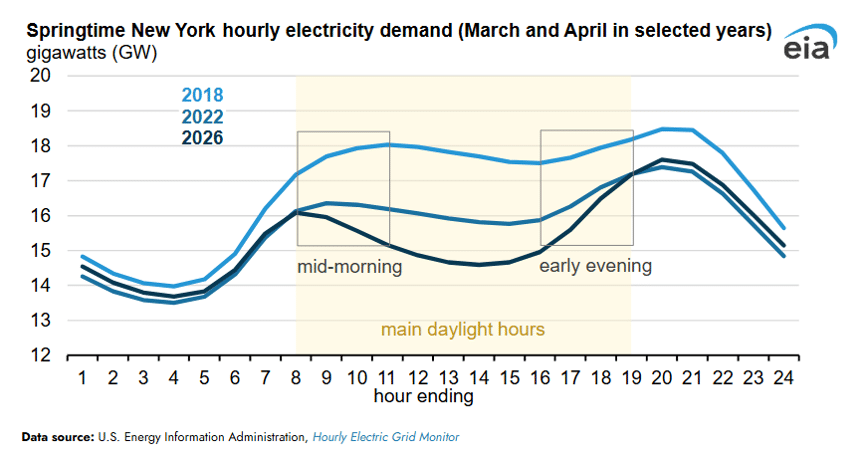
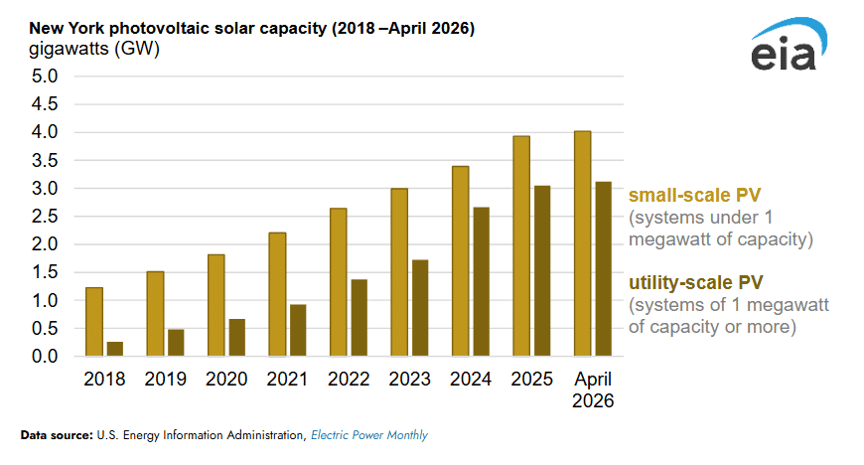
The EIA says the impact is especially noticeable during March and April, when strong solar output coincides with relatively low electricity demand. Morning grid demand, which increased by an average of 850 megawatts between 8 a.m. and 11 a.m. in 2018, has shifted to an average decline of 923 megawatts in 2026. Meanwhile, evening demand between 4 p.m. and 7 p.m. has surged from an average increase of 681 megawatts in 2018 to 2,221 megawatts in 2026, requiring grid operators to rapidly ramp up other power sources as solar generation fades.