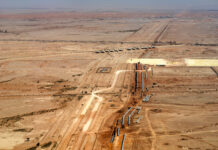

HSBC Chief Executive Georges Elhedery said investment in alternative energy transport routes could make the Strait of Hormuz largely unnecessary within five years, as Gulf countries seek to reduce their reliance on the strategic waterway following the war with Iran. According to Reuters, the strait previously handled about one-fifth of global oil and liquefied natural gas (LNG) trade, making disruptions a major threat to global energy security.
Gulf nations are accelerating plans to build pipelines that connect energy-producing areas to ports outside the Strait of Hormuz, along with other infrastructure investments designed to keep exports flowing during regional crises. HSBC identified $872 billion in individual infrastructure project packages across the Middle East, North Africa, and Türkiye, within a broader pipeline of $1.4 trillion in planned but unawarded projects.
Despite the conflict’s economic impact, Elhedery expressed confidence in the region’s long-term recovery, citing continued investor interest in Gulf markets. The World Bank, however, forecast a 1.3% contraction in the Middle East, North Africa, and Pakistan region in 2026, followed by an uneven recovery in 2027. The proposed alternative routes could strengthen energy supply resilience, although making the Strait of Hormuz largely redundant would require substantial investment and infrastructure development.