
In 1999, most equity investors thought they couldn’t go wrong. Anything they bought simply gained in value. Easy, right? Not so fast. Soon, many Americans were facing a retirement disaster of their own creation. In July of 2004 I wrote:
You’ve Lost 37%…
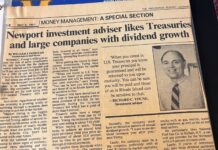
Treasuries are boring! Right? You may be in the boring, boring camp, as are many investors. I hear Treasuries described as boring all the time. And yet I wonder what it is that is just so boring about a security that has no credit risk, no stock market risk, and offers a steady flow of cash. Furthermore, the U.S. government 100% guarantees all interest rate payments and timely return of principal at maturity. Well just for the heck of it, I looked up the word “boring” in my mini Webster’s Pocket Dictionary. Tiresome is used to describe boring. Let’s see…tiresome? Do you equate a steady flow of risk-free cash and a 100% guarantee of your principal as tiresome? I sure don’t.
The Fuddy-Duddy and the Scold
Let’s dig a little on the boring/tiresome front. Let’s say you retired at year-end 1999, after having some good years in the stock market. In fact, after the spectacular stock market run of the late 1990s, you may have considered yourself a pretty shrewd stock market investor. Many investors, consumed with aggressive investing, had literally gotten smart overnight, or so they thought. Dividends were disdained. Warren Buffett had almost morphed into a tedious fuddy-duddy. The father of value investing Ben Graham’s margin of safety principle was gathering more dust than a stack of Brenda Lee records. Mr. Mutual Fund Jack Bogle’s table pounding on low fees and mutual fund integrity had turned this revered pioneer into a silly old scold.
So as 1999 came to a close, you packed away your gold watch and stepped off the commuter train for the last time, here’s what no doubt unfolded, if not for you then for a big percentage of your cohorts in the retirement class of 1999.
Retirement Disaster
Armed with newfound aggressive stock market success formulas of the 1990s, you assembled a portfolio of equities, 50% NASDAQ and 50% S&P 500. No boring U.S. Treasuries and the like for you. In fact, no fixed income at all. After all, how could market-beating mid-teen growth be racked up with fixed income? Fixed income was for old people, right?
OK, let’s see how the retirement class of 1999 has done. Oops, in the nearly five years since retirement, a portfolio of 50% NASDAQ/50% S&P is down by 37%. Now I have not included dividends here, but little in the way of dividends is offered by the NASDAQ and S&P, so let’s not quibble. Far more serious issues are at hand.
A Life’s Savings Down the Rat Hole
If, for example, you had an equities portfolio worth $1 million at year-end 1999, it now would be worth $610,000. As a retiree, drawing my mandated 4% (today’s max) would give you $24,000 annually, versus $40,000 at retirement. That’s a nasty jolt to a retirement standard of living. But no sweat. Stocks will roar back, right? They did roar back. My numbers are post last year’s charge. These truly depressing numbers are after an enormous comeback in 2003. Most equities today are once again on a downward slope.
It turns out, that sometimes it’s better to be a fuddy-duddy. If you aren’t sure how to build a portfolio that seeks to protect you in times of market turmoil, please fill out the form below. You will be contacted by a seasoned member of the investment staff at my family run investment counsel firm. They will give you a free portfolio review and explain some changes you could make to better achieve your goals. Building a strong investment plan and working to achieve its goals can help you avoid sending your life’s savings down a rat hole.
Originally posted on Young’s World Money Forecast.