
Loni Prinsloo, Riley Griffin, Jillian Deutsch, and Olivia Solon of Bloomberg report that several major subsea internet cables meant to run through the Red Sea — including Meta’s 2Africa, Google’s Blue-Raman, India-Europe-Xpress, Sea-Me-We 6, and Africa-1 — remain incomplete as escalating conflict and security threats make the region too dangerous for cable-laying ships. Missile attacks by Iran-backed Houthi forces, complex permit negotiations, and geopolitical risks have halted construction, delaying vital broadband expansion for underserved regions and forcing operators to buy capacity on alternative routes. The disruptions are raising costs, slowing internet speeds, and undermining investor returns. As the Red Sea becomes a high-risk chokepoint, tech and telecom companies are exploring overland alternatives through Saudi Arabia, Bahrain, and even Iraq, while some consider seeking U.S. exemptions or NATO support to resume work. Ultimately, the crisis is pushing the industry toward more diversified and resilient global connectivity routes. They write:
Multiple subsea internet cables slated to run through the Red Sea are yet to complete as planned, as political tensions and heightened security threats have made the route more dangerous and complicated for commercial vessels.
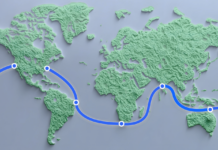
Meta Platforms Inc.’s 2020 plans for 2Africa, a 45,000-kilometer (28,000 mile) subsea cable system, included a map showing how it would loop around the African continent to deliver vital high-speed connectivity. […]
Progress in the region has also been delayed on the Google-backed Blue-Raman cable, a spokesperson for Alphabet Inc.’s Google said, without providing any further details.
Other cables that have yet to go live through the Red Sea include India-Europe-Xpress, Sea-Me-We 6 and Africa-1. Representatives for telecommunications companies involved in those cables either declined to or did not respond to requests for comment. […]
The Red Sea has historically been the most direct and cost-effective route for internet data arteries connecting Europe with Asia and Africa. But construction is complicated by its status as a conflict zone, and the sensitive negotiations required by cable operators to obtain permits. […]
Other companies involved with the cables are considering applying for a US Treasury Department exemption to engage directly with the sanctioned Houthi-backed government in Sanaa, Yemen, to obtain permits to continue work, according to people familiar with the matter. They asked to remain anonymous as the information is private. They are also considering calling for assistance from the North Atlantic Treaty Organization, the people said.
The Red Sea corridor is now seen as a “critical, high-risk single point of failure,” Rashid said.
Ultimately, diversifying away from the Red Sea “will lead to much more resilient infrastructure, with a diverse array of connection points from the Middle East and Africa to Europe,” said Mauldin.
Read more here.