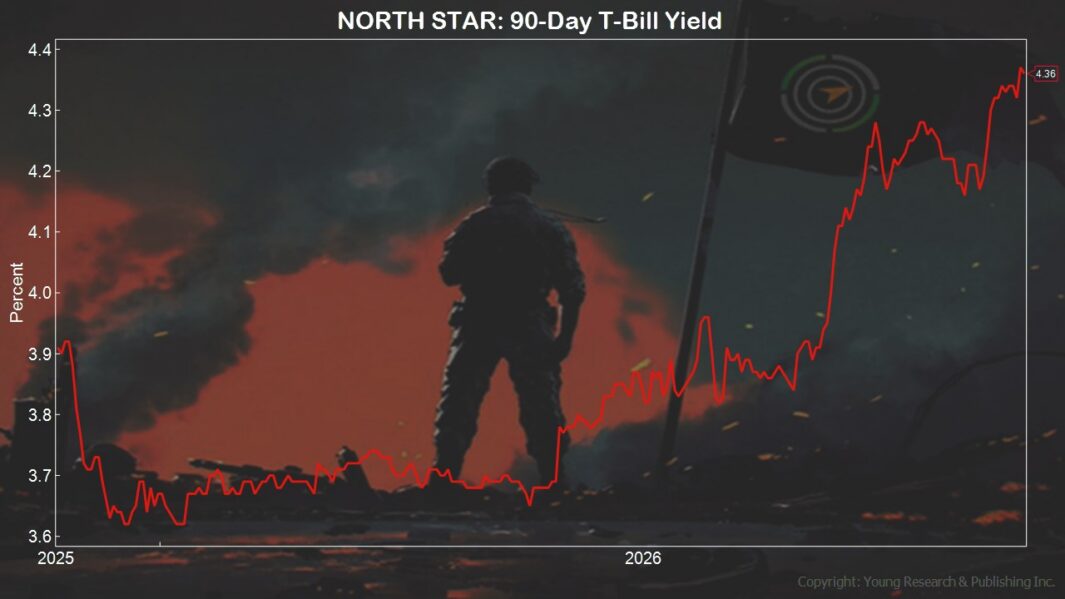
In times like these, it’s important to get a lay of the land, and the first place Your Survival Guy looks is Dick Young’s North Star, the 3-month Treasury bill. When I see investors reaching for yield many multiples above this beacon, it tells me they must be ok with risk. Unless, that is, they have no idea what risk means or what type of risks they’re taking until after the fact.
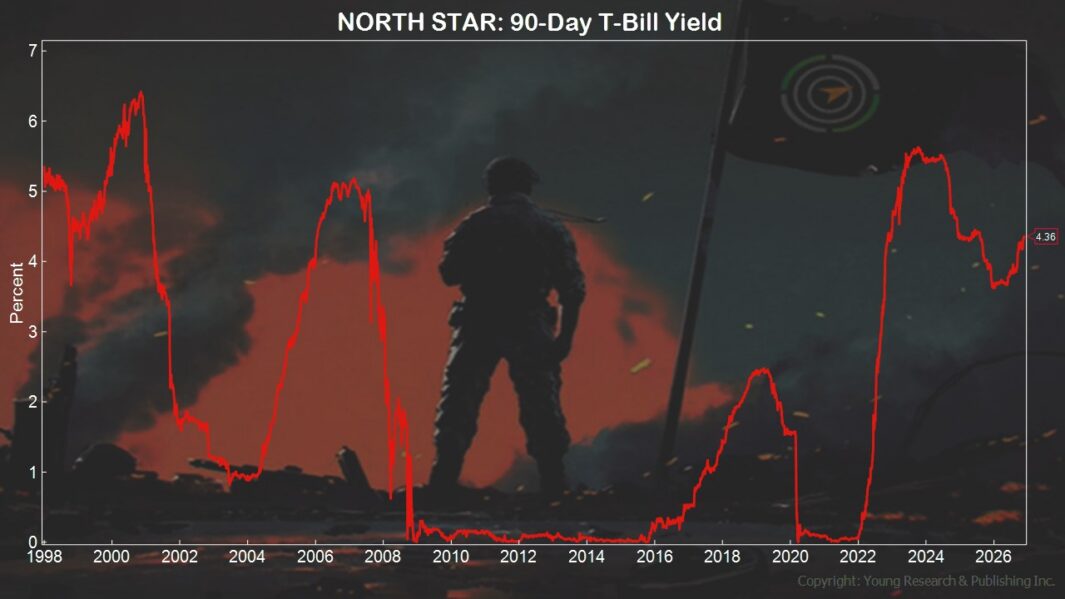
When you examine your own risk tolerance, you may find that, like a boater lost in the fog in rough seas, you feel uneasy and disoriented. You don’t like being tossed about and not being able to see the horizon. That’s no time to realize your risk tolerance is, in fact, an intolerance.
I’ve Seen This Happen Over and Over Again
When times get tough, isn’t it interesting how, rather than seek out bargains in stocks, investors seek out peace of mind? Your Survival Guy has been through plenty of rocky markets, and I’ve seen this happen over and over again.
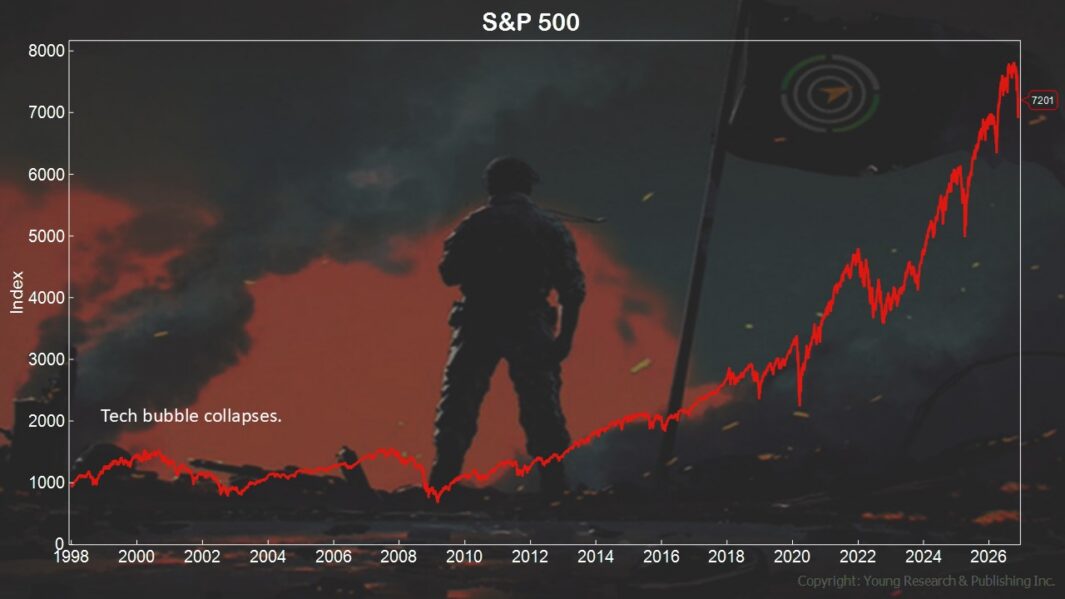
Unfortunately for retirees, this is uncharted territory. Having no paycheck to fall back on can be terrifying. When things get scary, they look to a net worth number they just can’t afford to go below, and they sell ’til they can sleep. But look at the stock market years after the tech and financial busts.
Look Back at Last Year
Look at where we were this time last year. Investors were wringing their hands over a 43-day federal government shutdown, the longest in U.S. history, and the freshly elected Mayor Mamdani. The stock market didn’t seem too concerned.

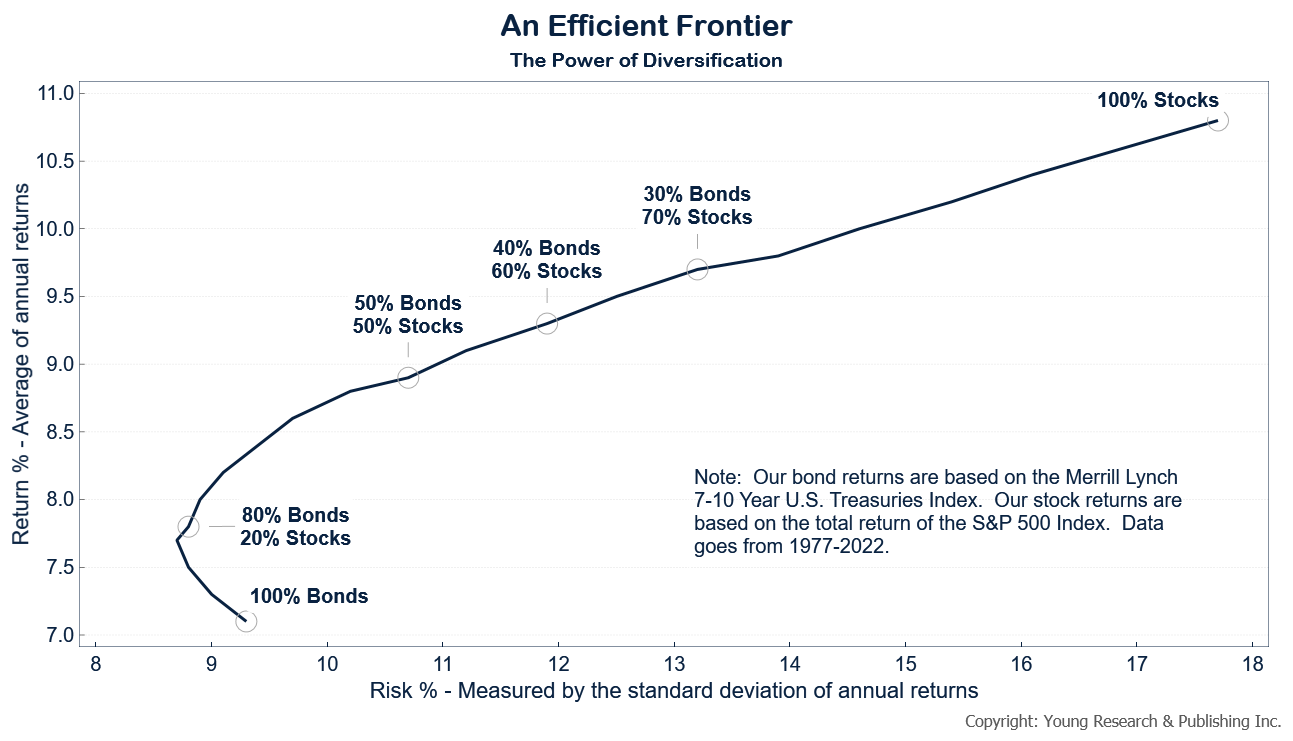
Are You Investing on the Efficient Frontier?
Are you allocated according to your risk tolerance? In 1952, Harry Markowitz, a young economist, described in a paper, Portfolio Selection, what would, through evolution and refinement, become known as the Efficient Frontier. The Efficient Frontier measures the efficient diversification of investments that delivers the highest level of return at the lowest possible risk. Investors must consider the trade-offs between risk and reward in their portfolios. You can see on the chart below an efficient frontier line representing risk vs. reward for a portfolio allocated between different proportions of stocks and bonds.

Action Line: Being calm and steady in choppy waters with low visibility isn’t easy. Receive the guidance you deserve. Let’s talk. Email me at ejsmith@yoursurvivalguy.com.
Originally posted on Your Survival Guy.