The US Energy Information Administration reports that many states slightly increased their gasoline taxes and fees over the past year, with the average state gasoline tax rising to 33.5 cents per gallon as of January 1, 2026. Rates vary widely across the country, with California among the highest and Alaska among the lowest, and most states made modest adjustments to their fuel tax structures compared with the previous year. The EIA reports:
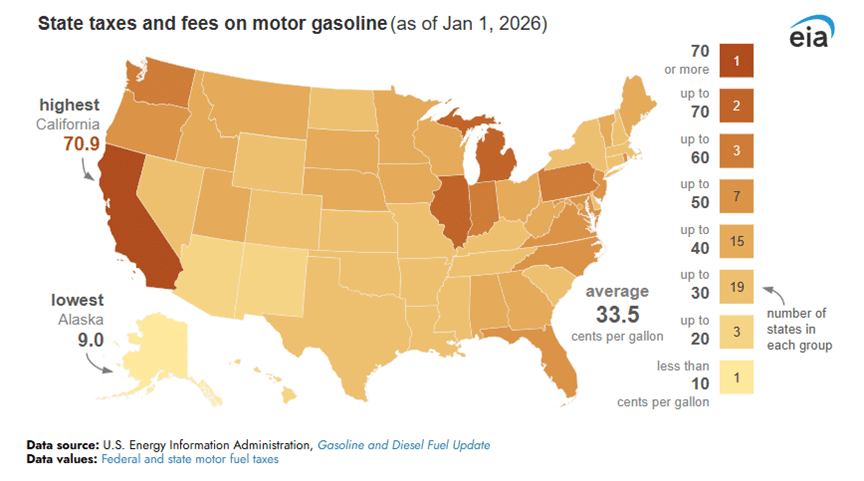
State taxes and fees on motor gasoline as of January 1, 2026, ranged from a high of 70.9 cents per gallon (c/gal) in California to a low of 9.0 c/gal in Alaska. State gasoline taxes averaged 33.5 c/gal across states, a slight increase from their average last year.
We compile this information twice a year by collecting tax and fee information as of January 1 and July 1, as those dates align with the timing of many states’ changes in taxes. Twenty-six states have changed their gasoline taxes between the first day of 2025 and the first day of 2026, with 19 states raising taxes and 7 states lowering taxes. Two notable changes included Michigan’s tax increase of 20.8 c/gal and Washington state’s increase of 6.2 c/gal. All other states’ gasoline tax changes were within 5 c/gal of their January 1, 2025 value.
We also publish state-level diesel taxes and fees, which ranged from a high of 87.3 c/gal in California to a low of 9 c/gal in Alaska and averaged 35.9 c/gal across all states. These state taxes do not include the federal gasoline tax of 18.4 c/gal and federal diesel tax of 24.4 c/gal, which have remained unchanged since October 1993.
Consumers in California often pay among the highest prices for gasoline in the United States. In addition to excise taxes and other fees, California requires a special blend of gasoline that requires more processing steps and more expensive blending components but is intended to alleviate air quality issues associated with gasoline consumption.