President Trump and his administration have been touting a return to high oil flows through the Strait of Hormuz, but upon hearing that news, many Americans are wondering why prices at the pump aren’t coming down. Let’s break it down.
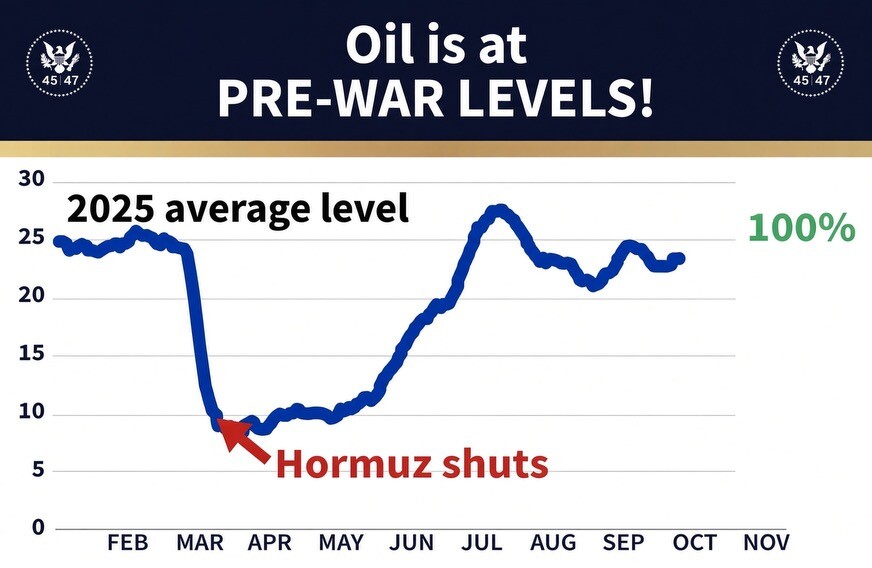
For starters, the President told reporters on October 7 that oil was moving through the Strait of Hormuz “at levels that were now even and sometimes exceeding prior to the war.” The day before he posted this chart:
Energy Secretary Chris Wright has also mentioned the return to normal flows of oil through Strait, explaining to Fox News that “over 20 million barrels of oil, more than pre-conflict levels, flowed out of the strait.”
This is obviously good news, and the President and Secretary of Energy are right to celebrate it. But oil prices are still high. Prices for Brent crude are back above $100/barrel.
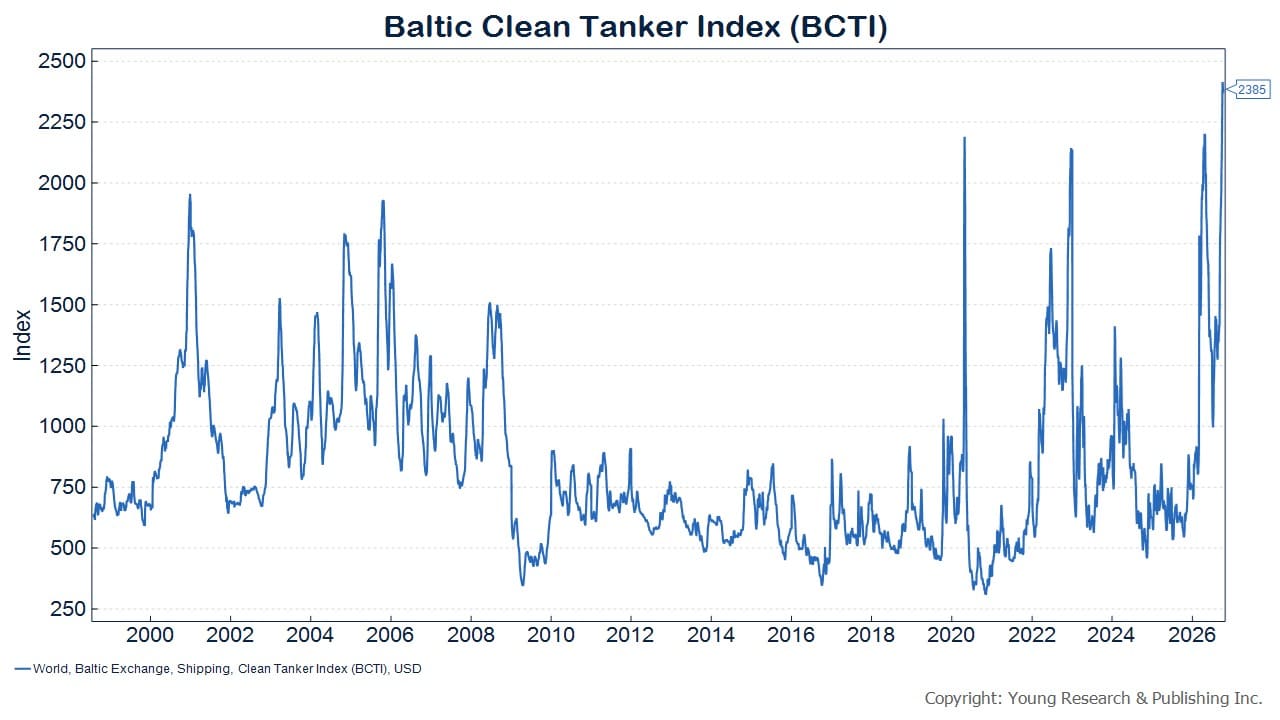
So what’s driving the price today? One part of the problem is that while crude oil shipments have increased, the price of shipping itself has skyrocketed. The Baltic Clean Tanker Index (BCTI), a measure of tanker pricing, is at levels never seen before.
The high prices of shipping don’t just affect tankers going through the Strait of Hormuz. Bloomberg journalist Alaric Nightingale reports that the price of hiring a VLCC-sized oil tanker to carry oil from the U.S. to Asia has increased from $9.2 million in 2025 to an astounding $77 million today. According to Jay Hilotin of Gulf News, the high shipping prices for VLCCs adds $33/barrel to the price of Brent crude.
There are other factors involved in oil’s persistently high prices despite supply returning to more normal levels, but shipping is likely to be one of the largest factors in continuing elevated prices.