The IMF recently released an “annual check-up of the U.S. economy.” The prescription offered by the international organization was similar to its only prescription ever for economies, kick the can down the road.
The IMF’s Deniz Igan calls the strategy, “Protect the fragile recovery,” but what that means is obvious. The IMF solution is to keep tax rates low (which we generally agree with if spending is controlled), and to keep spending as much money as possible. Oh, the IMF calls for deficit reduction, but only somewhere down the line when the economy can handle the shock “the bulk of deficit reduction should begin when the economy is firmly back on its feet and before the public debt ratio starts rising again.”
These policies may help GDP numbers in the short term, but the extra growth generated by the policies must come from the future. Pulling growth forward into the present is simply not a sustainable way to run an economy and potentially could lead to worse recessions in the future.
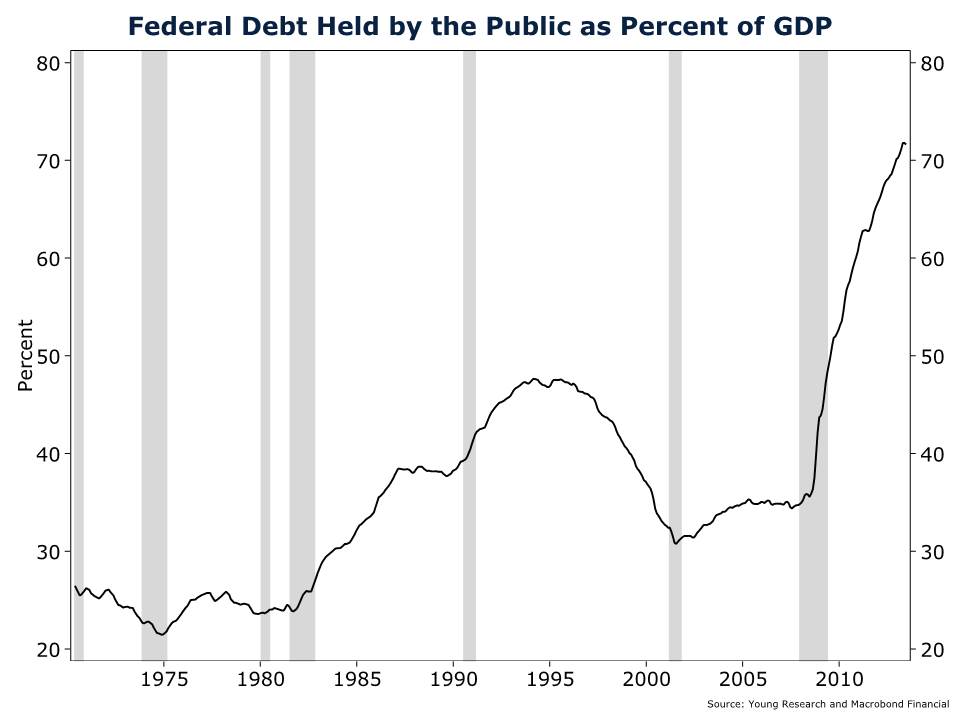
For some perspective on just how much growth is being pulled forward to keep today’s GDP numbers from crashing through the floor, take a look at our Federal Debt to GDP chart. As the percentage climbs, future years’ growth will be hampered by having to pay back that borrowing.