
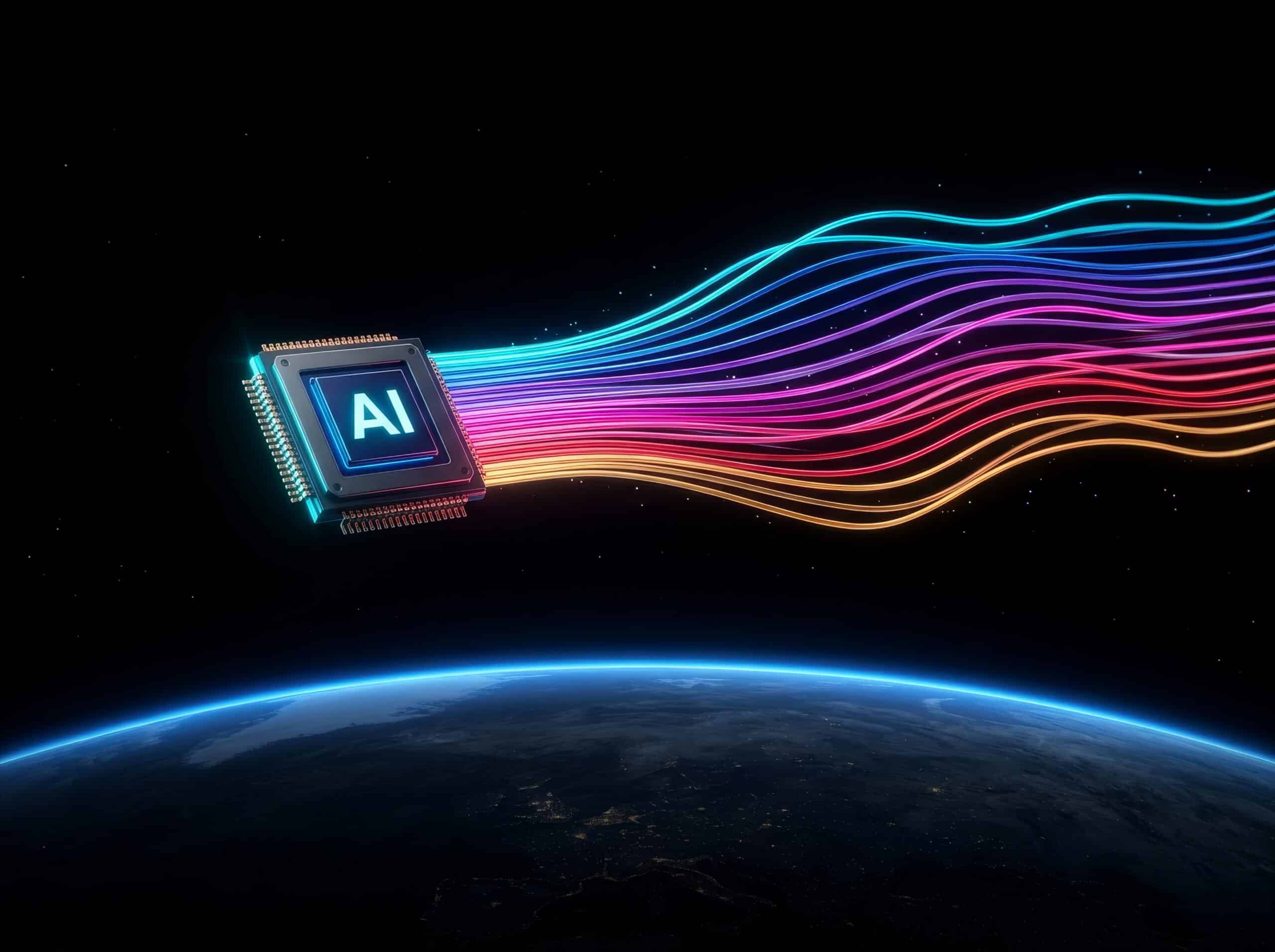
Google’s Project Suncatcher is testing whether AI computing infrastructure could eventually operate in space. Its first orbital test will send a prototype satellite carrying Google Tensor Processing Units (TPUs) into low Earth orbit to study how the chips handle radiation, vibration, temperature, and other conditions.
Google says space could offer near-constant sunlight and significantly greater solar power, potentially supporting large networks of satellites running AI workloads. However, major engineering challenges remain, particularly cooling chips in a vacuum, protecting electronics from radiation, and connecting satellites with high-bandwidth laser links.
The initial mission is designed to gather data rather than deploy a full AI data center. Google plans further tests in 2027, including satellite-to-satellite connectivity, as it explores whether scalable AI computing in orbit is technically feasible.