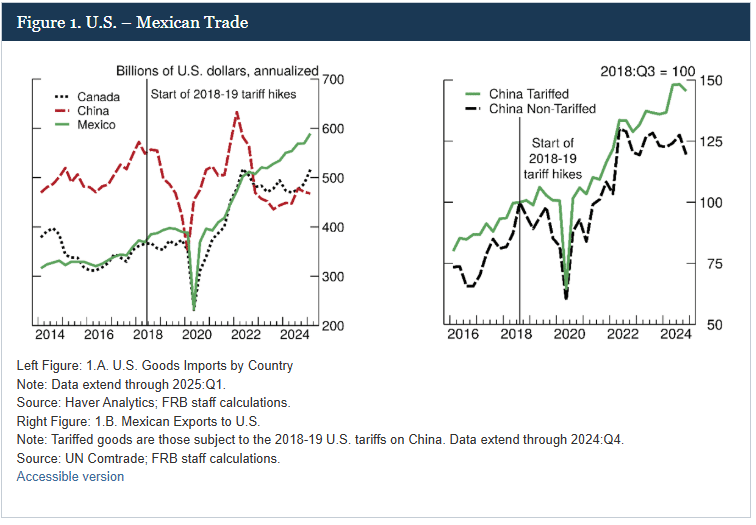

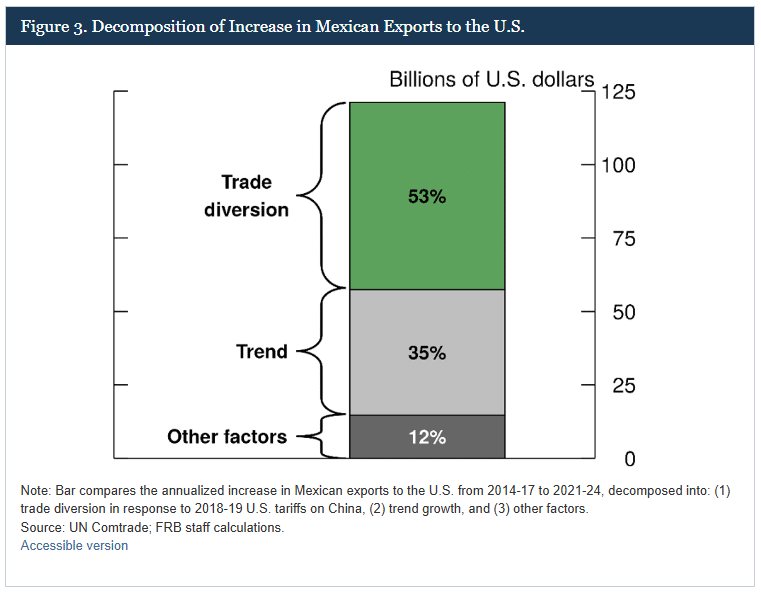
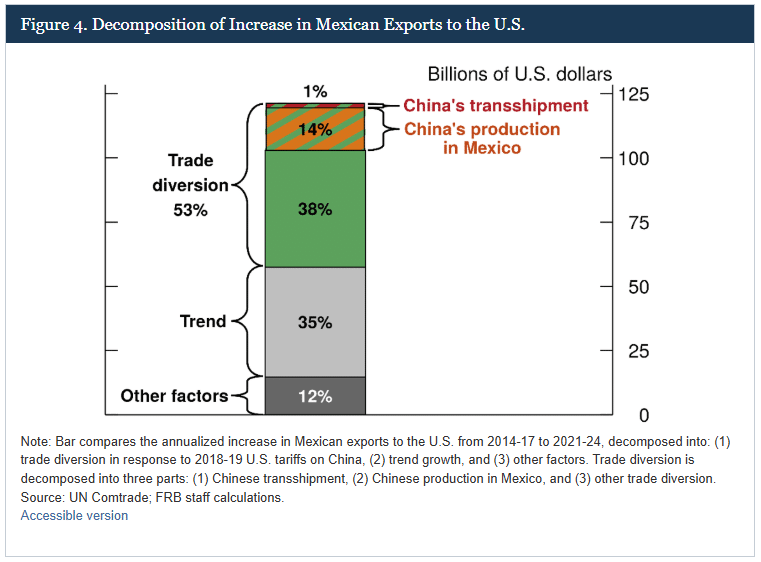
Using a decomposition framework, the authors find that about 53% of Mexico’s export growth to the US is due to trade diversion from the tariffs. Around 14 percentage points is linked to Chinese production activity in Mexico, while most of the rest comes from Mexican and other foreign firms expanding production. True transshipment of Chinese goods is found to be minimal.

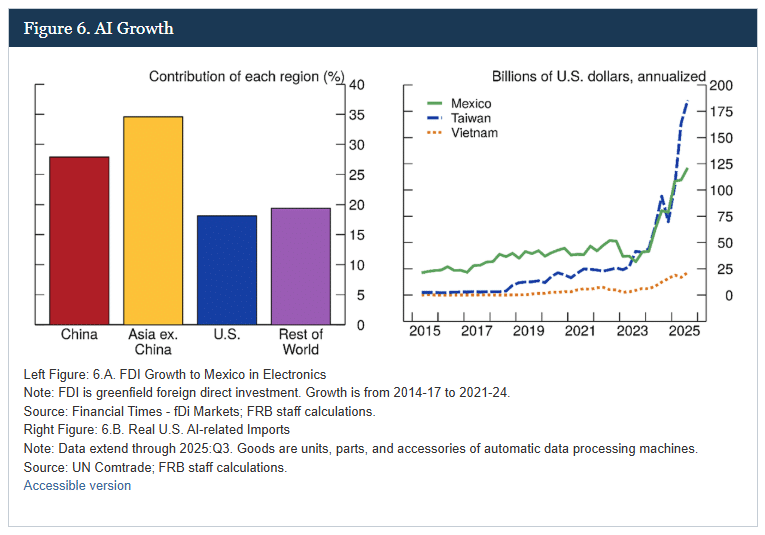
The main conclusion is that tariffs mainly trigger real supply chain relocation rather than simple rerouting, but they also create indirect exposure to China through production shifts to third countries like Mexico—including in fast-growing sectors such as AI-related goods.