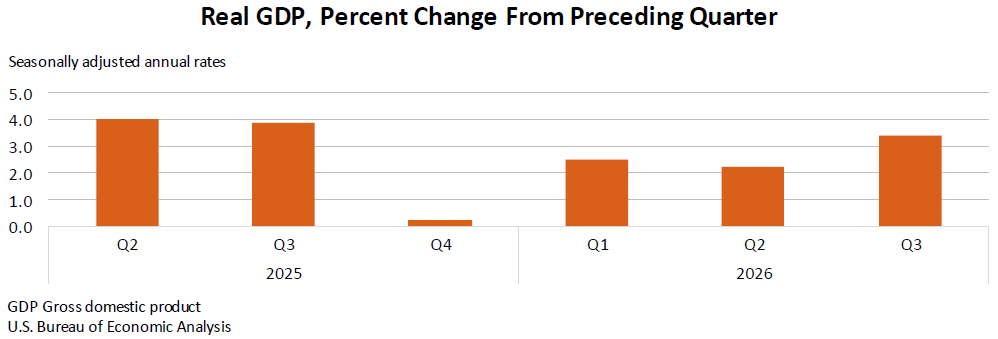
The U.S. economy grew at an annualized rate of 3.4% in the third quarter of 2026, accelerating from 2.2% in the second quarter, according to the Bureau of Economic Analysis’ advance estimate. Growth was driven by increases in private investment, consumer spending and government spending, partially offset by declining exports. Investment gains were led by private inventories and equipment, while consumer spending increased across both goods and services, particularly healthcare, food services and prescription drugs.
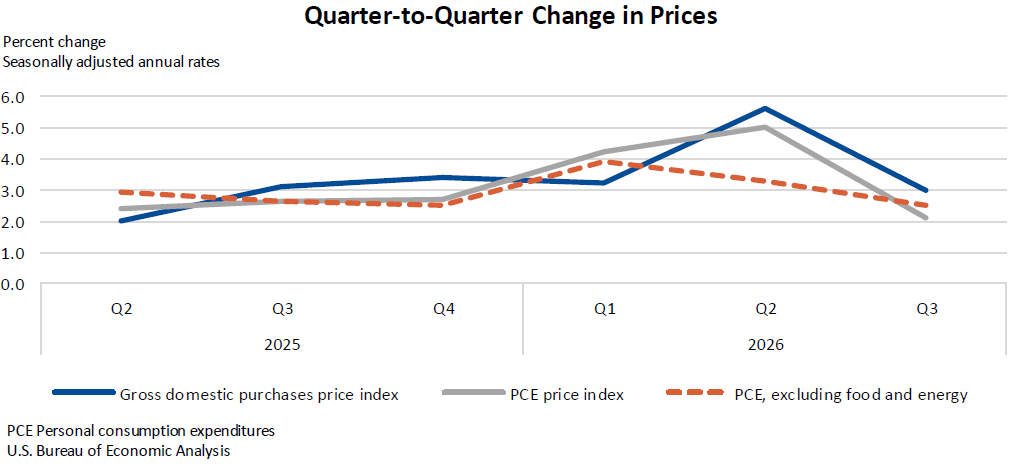
Underlying domestic demand remained strong, with real final sales to private domestic purchasers rising 4.9%, compared with 4.6% in the previous quarter. Meanwhile, inflation measures showed slower price growth: the personal consumption expenditures (PCE) price index rose 2.1%, down from 5.0% in the second quarter, while core PCE inflation eased to 2.5% from 3.3%. The gross domestic purchases price index also slowed to 3.0% from 5.6%, suggesting a moderation in broad domestic price pressures.
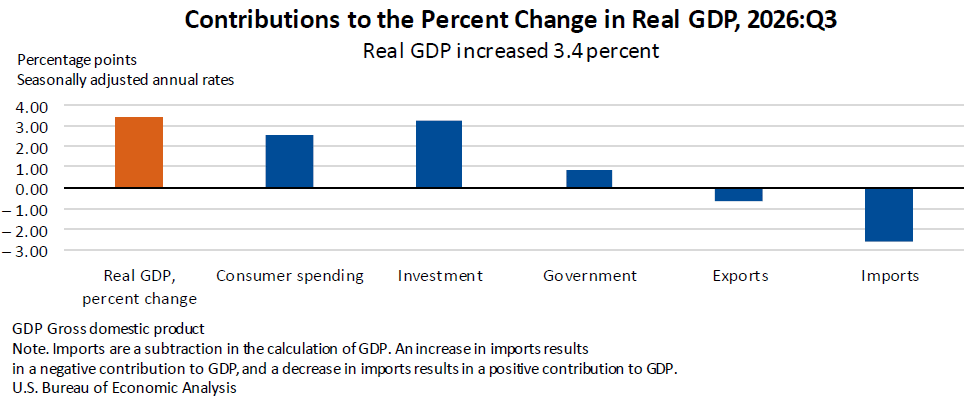
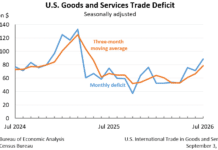
Despite stronger economic growth, exports declined, and imports increased, reflecting continued shifts in trade flows. The third-quarter figures indicate that domestic demand and investment supported economic momentum, while easing inflation measures offered some relief on the price front. The estimates are preliminary, with the BEA scheduled to release its second estimate of third-quarter GDP and corporate profits on November 25, 2026.