
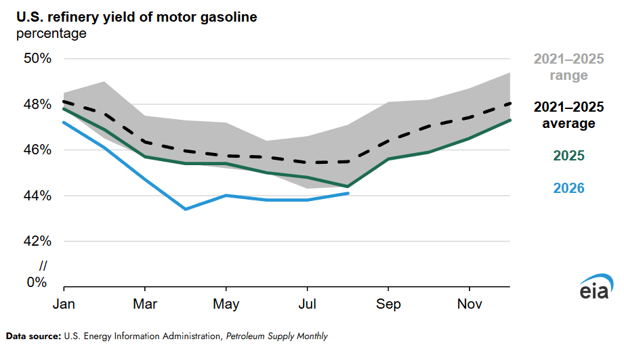
The U.S. Energy Information Administration (EIA) reports that U.S. refineries have shifted production away from gasoline toward diesel fuel and jet fuel in 2026, driven by significantly higher refining margins for middle distillates. According to the EIA’s latest Petroleum Supply Monthly data, covering January through August 2026, gasoline’s share of refinery output averaged below 45%, falling beneath the five-year historical low every month. Historically, gasoline has accounted for approximately 45%–50% of U.S. refinery production.
In contrast, production yields of distillate fuel oil, commonly used as diesel, have generally remained above the five-year average, while jet fuel yields have also increased. U.S. refinery jet fuel yields exceeded 12% for the first time in March 2026 and remained at or above that level through August. The shift reflects constrained global supplies of diesel and jet fuel, which have pushed refining margins and crack spreads higher, creating stronger financial incentives for refiners to prioritize these products over gasoline.
The changing production mix highlights how global fuel supply conditions and profitability are influencing U.S. refinery operations. While refiners are maximizing output of higher-margin middle distillates, reduced gasoline production could add pressure to gasoline supply and prices, depending on demand, imports, and overall market conditions. The trend also underscores the importance of refining flexibility in responding to changing global energy markets.