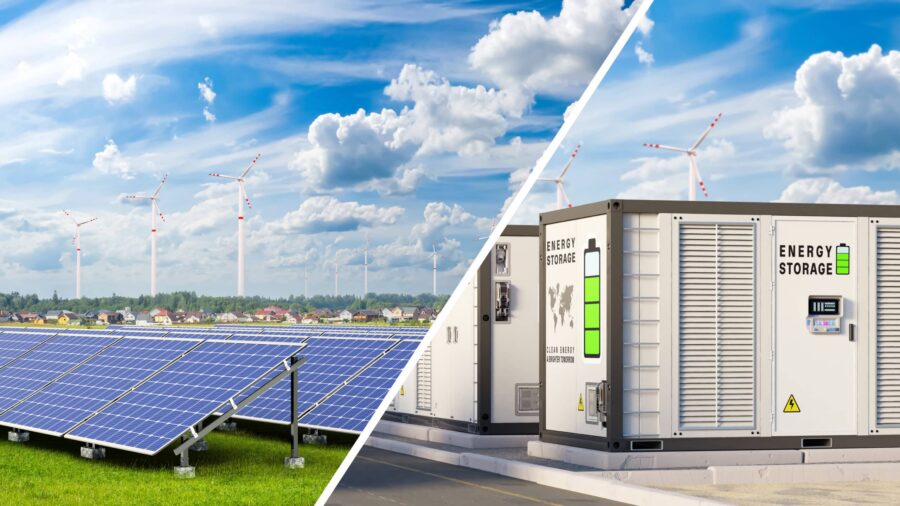
Utility-scale solar developers are increasingly pairing new solar photovoltaic (PV) installations with battery storage to improve energy management and maximize electricity market value. According to U.S. Energy Information Administration (EIA) data, more than 16% of new utility-scale solar capacity added through September 2026 was co-located with operable battery storage, compared with just 2% in 2017. Based on planned projects, this share could rise to 19% by the end of 2026 and exceed 30% for additions scheduled in 2027 and 2028.
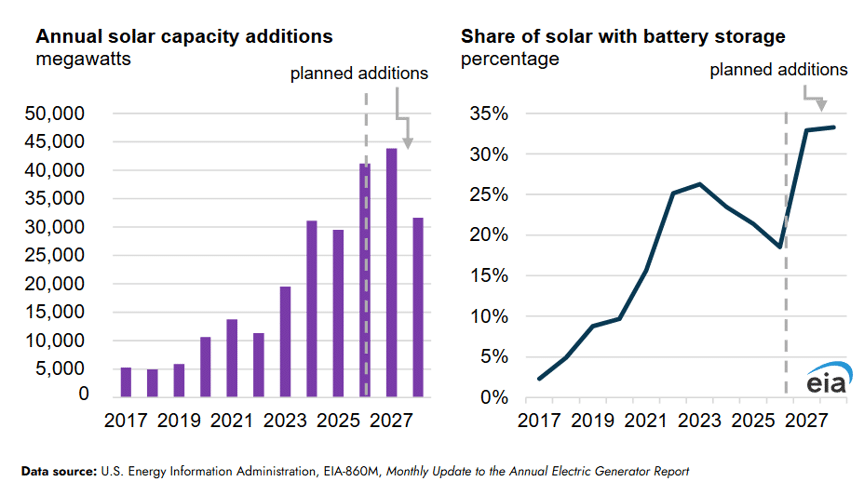
Co-located solar and battery systems allow operators to store excess electricity generated during periods of strong sunlight and deliver it to the grid when demand and wholesale electricity prices are higher. This flexibility helps reduce dependence on immediate solar generation and allows developers to maximize revenue as electricity prices fluctuate throughout the day, particularly in regions with significant solar penetration.
The trend is particularly strong in the southwestern United States, where solar accounts for a larger share of electricity-generating capacity. California, Arizona, New Mexico, and Nevada have more than twice the national average share of solar capacity paired with battery storage. Nationally, solar photovoltaic accounts for approximately 13% of utility-scale generating capacity, with 18% of that solar capacity co-located with batteries, highlighting the growing role of energy storage in the expansion of U.S. renewable energy.