
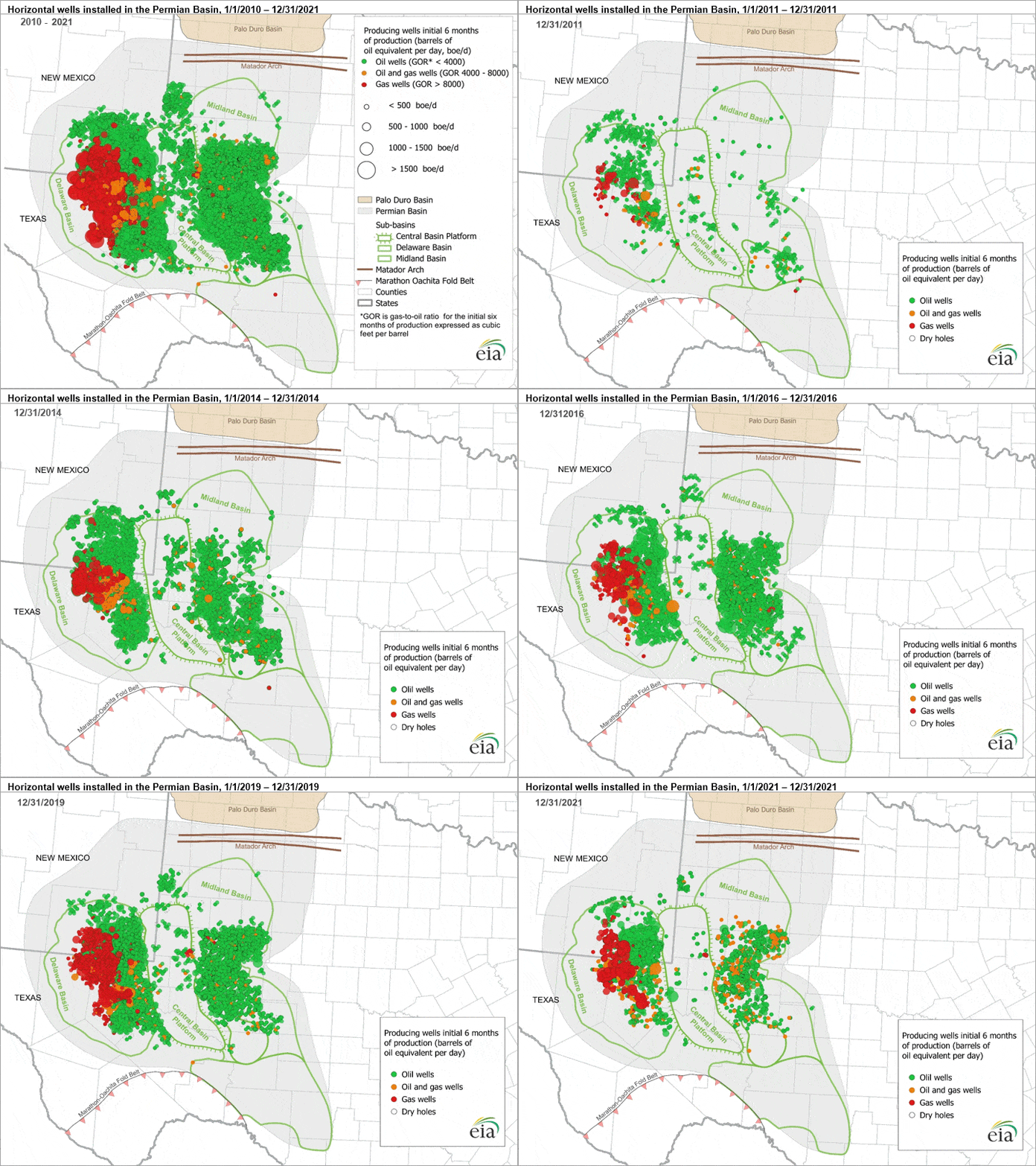
Oil and gas operators in the Permian Basin of western Texas and eastern New Mexico are increasingly drilling longer horizontal wells, including “super-laterals” exceeding 15,000 feet, to increase production while limiting the need for additional wells and infrastructure.

The shift has been dramatic. Wells shorter than 5,000 feet accounted for 43% of completions in 2015, but just 4% in 2025. Meanwhile, super-laterals, which were virtually nonexistent before 2020, represented 15% of new Permian well completions in 2025.
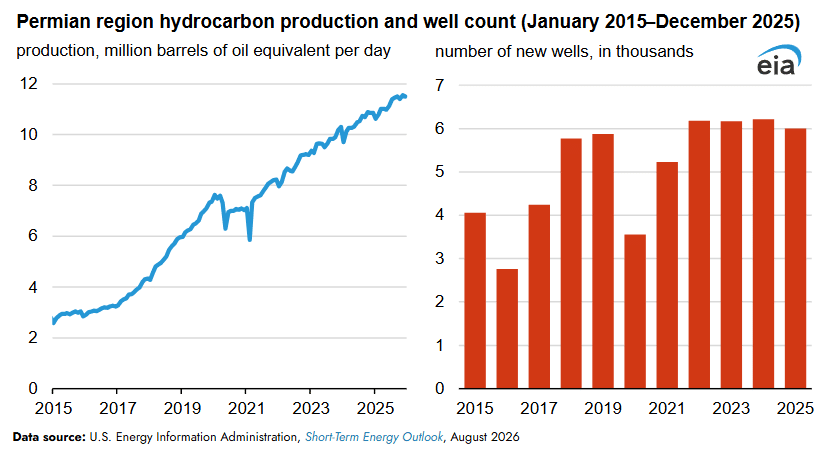
Longer wells have helped drive a major increase in regional output. Permian production rose from 2.9 million barrels of oil equivalent per day in 2015 to 11.2 million BOE/d in 2025, a 284% increase, even as annual well completions have remained relatively stable at around 6,000 since 2022.
The average horizontal well’s lateral length also increased 77% over the decade, from 6,149 feet in 2015 to 10,867 feet in 2025, highlighting how operators are extracting more hydrocarbons from each well.