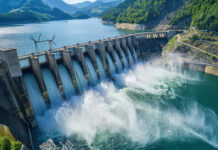

Many dams across the United States are ageing, underfunded, and in worse condition than previously believed, earning a D+ in the 2025 Report Card for America’s Infrastructure. More than 2,500 dams are classified as high hazard and in poor repair, reports Andrew Paul of Popular Science. Satellite radar analysis suggests some dams continue to sink and deteriorate internally, even after stabilization efforts, raising concerns about hidden structural risks. Experts warn that without significantly increased investment and improved maintenance, dam failures could threaten lives, downstream communities, and the national economy, though better monitoring and prioritization could help reduce the danger. Paul writes:
Dams across the United States are in dire need of repairs, and the critical infrastructure may be even worse off than engineers anticipated. According to geoscientists, over 2,500 of the more than 16,700 structures in the country are classified as high hazard potentials and in “poor condition.” This classification means that the dams that would cause significant death and destruction if compromised. What’s more, radar analysis indicates many of these facilities may still be deteriorating out-of-sight from inspection crews.
The U.S. is home to over 92,000 dams dedicated to hydroelectric power, drinking water, and environmental protection for surrounding communities. However, the majority of these aren’t new or updated projects. Most active dams were constructed during the 1950’s and 1960’s, and the average age of a facility is 61 years old. Today, an estimated seven out of 10 dams in the country are at least 50-years-old. Despite their criticality, maintenance and monitoring remains vastly underfunded. Although the Association for State Dam Safety Officials calculates over $165 billion is needed for repairs, federal funding currently allocates a fraction of that amount towards upkeep. […]
Using a satellite tool called the Interferometric Synthetic Aperture Radar, Khorrami and his colleagues examined the level that many high-risks dams have sunk into the earth over the past decade. They particularly focused on hydroelectric structures because of both their downstream communities as well as the amount of infrastructure that relies on them. The results stunned them. In many cases, dams believed to have been already stabilized were continuing to sink. […]
They cited the Roanoke Rapids dam in North Carolina as an example. Khorrami and his team’s findings confirmed previous inspections of the site—the dam’s northern face is sinking slowly. Without vital repairs, the structural concrete could eventually crack and threaten the nearby town of over 15,000 residents. But the consequences of such a disaster go beyond their nearby communities.
“Some of the dams actually serve as a sub-buffer for water that’s used for agriculture and for electricity production,” said Shirzaei. “Those dams can create a ripple effect if they fail that can impact the national economy.” […]
“Almost 40-50 percent [of risk] is something that is in our hands,” he said. “It’s difficult to address all of these dams. If you cannot financially take care of all of them at the same time, we can provide the priority dams.”
Read more here.