
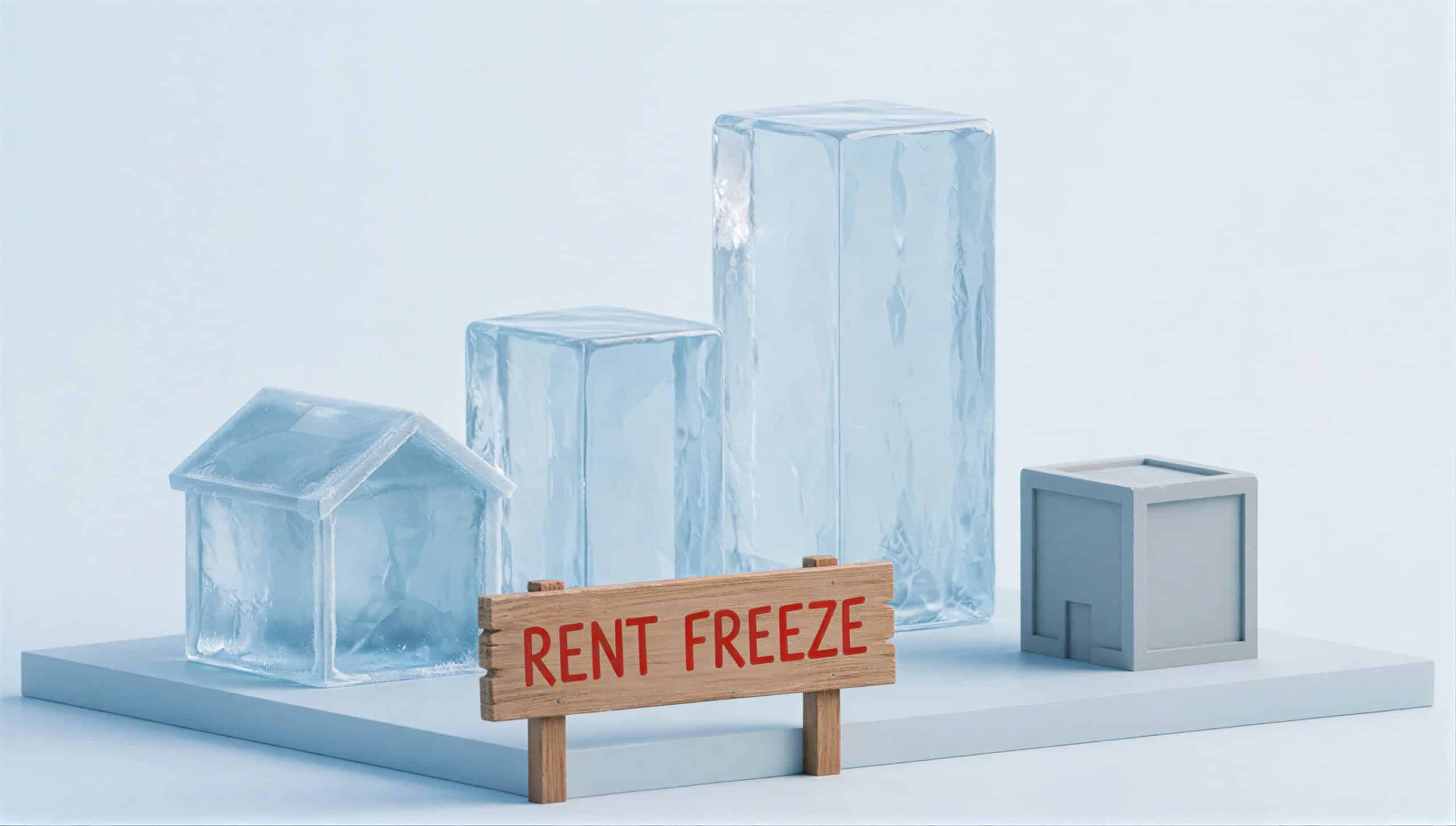
You would think that in New York, a city with over 2.3 million renter-occupied housing units—nearly 63% of all housing units in the city—landlords would be given at least a level playing field. They do, in fact, house a majority of the city’s residents in their buildings. But many landlords in New York are at the mercy of the Orwellian-sounding Rent Guidelines Board (RGB), a bureaucracy appointed by the mayor to manage rent increases.
NYC’s current mayor, Zohran Mamdani, campaigned hard on a “freeze” in rent, and stacked the RGB with loyalists who carried out his orders to stick landlords with inflation and high costs they can’t pass on to renters. The RGB voted to allow 0% increases in rent for one- and two-year leases of rent-stabilized units (nearly 1 million).
But property owners who are affected by the RGB’s crackdown on capitalism are fighting back as best they can. They have challenged the rent freeze in court. John Ketcham reports in City Journal, writing:
Defenders of the freeze point to the fact that courts have interpreted the Administrative Code to allow the RGB to consider tenants’ ability to pay. While this proviso undoubtedly affords the board discretion, it doesn’t permit it to set aside all the other factors. Doing so would effectively read all other considerations out of the statute, leaving tenants’ ability to pay the sole determining factor—despite the law’s clear text. If such political considerations could be dispositive, why didn’t the law’s drafters simply give the RGB’s powers to the mayor?
As the challengers emphasize in their pleadings, the evidence before the RGB—based upon the board’s own research—does not support a 0 percent increase. The board’s Price Index of Operating Costs report showed landlords’ expenses increased by 5.3 percent in the most recent year. According to the report’s findings, owners need increases of 3.4 percent on one-year leases and 4.8 percent on two-year leases to hold net operating income constant. About two weeks before the RGB vote, the city’s Water Board raised water and sewer rates by 6 percent. The RGB, however, ignored the actual increase and continued to rely on an assumption that utility costs would fall by 1.7 percent.
The board’s most glaring error is its selective and irrational manipulation of the data on owners’ net operating income (NOI). The RGB alleged that landlords have enjoyed a 6.2 percent jump in NOI. But that number is drawn from a dataset that includes buildings with both stabilized and market-rate units. In these mixed buildings, the income landlords derive from the market-rate units offsets increasingly distressed stabilized units, making it appear that the stabilized market is far healthier than is truly the case. NOI increased only 2.4 percent for buildings that contain solely stabilized units; in the Bronx, such buildings saw a slight decline in NOI. Tellingly, among 100 percent stabilized Bronx buildings with 100 or more units—the worst-situated buildings in the city—NOI fell by 7.7 percent.
This is another salvo in the self-avowed socialist Mayor Mamdani’s attack on capitalism in New York. You read just recently about his plan to displace independent grocery stores in the city with taxpayer-subsidized stores built by the government and offering discounted produce. The plan will tear apart local businesses currently competing in the New York City grocery market.
Action Line: Big blue blob cities like New York are harming business and property owners. It won’t be surprising if the ongoing exodus of money and residents from the city continues. If you’re looking for a better America, begin your search with Your Survival Guy’s 2026 Super States, and click here to subscribe to my free monthly Survive & Thrive letter.
Originally posted on Your Survival Guy.