
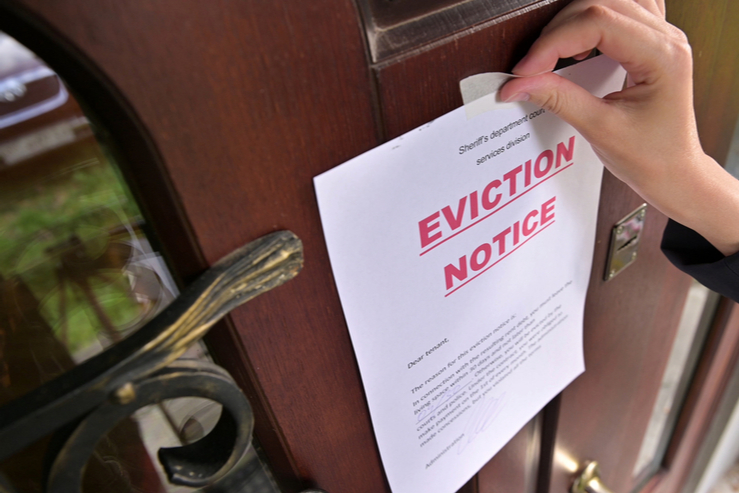
Landlords hoping for relief after months of having to pay mortgages and maintenance out of pocket will likely have to wait a bit longer. The Biden administration plans to extend its eviction moratorium. The Wall Street Journal reports:
A federal appeals court allowed the Biden administration’s latest eviction moratorium to remain in place, a move that could return the issue to the Supreme Court in a matter of days.
A three-judge panel from the U.S. Court of Appeals for the District of Columbia Circuit on Friday declined an emergency request by a group of property managers and realtors to lift the new moratorium, which the Centers for Disease Control and Prevention put in place on Aug. 3.
The appeal court’s order was brief and didn’t offer detailed legal reasoning.
“We are disappointed in today’s ruling, but the plaintiffs will continue fighting on behalf of America’s mom-and-pop housing providers and plan to file an emergency motion to the Supreme Court immediately,” said a spokesman for the National Association of Realtors, which helped fund the legal challenge.
The White House didn’t immediately respond to a request for comment.
The same appeals court in June rejected a similar bid to block the previous federal ban on evictions. In that earlier order, the D.C. Circuit said the CDC likely acted legally to protect struggling renters during the Covid-19 pandemic.
The Supreme Court in late June, on a 5-4 vote, allowed the last version of the moratorium to remain in place until it expired on its own terms at the end of July. But the court also signaled the CDC would be on weak legal ground if it attempted a further ban on evictions without authorization from Congress.
The Biden administration echoed that line and told lawmakers that any new eviction ban would have to come through legislation, but it changed course after liberal Democrats pressed the White House to act unilaterally.
President Biden has acknowledged that the latest moratorium might not hold up in court but said that it was worth trying—in part because it would buy more time for distributing some $47 billion in rental assistance that the federal government has already set aside. That money has been reaching tenants and landlords slowly because of a host of problems, including reliance on a patchwork of more than 450 state, county and municipal governments and charitable groups to distribute the aid.
Read more here.