

Copper surged to a record high as traders reacted to uncertainty over US tariffs and global supply concerns. The rally reflects strong demand expectations from electrification, power grids, and data centers, while disruptions at major mines are adding to supply concerns. Bloomberg’s broader outlook also points to a potential copper supply deficit as a key support for prices.
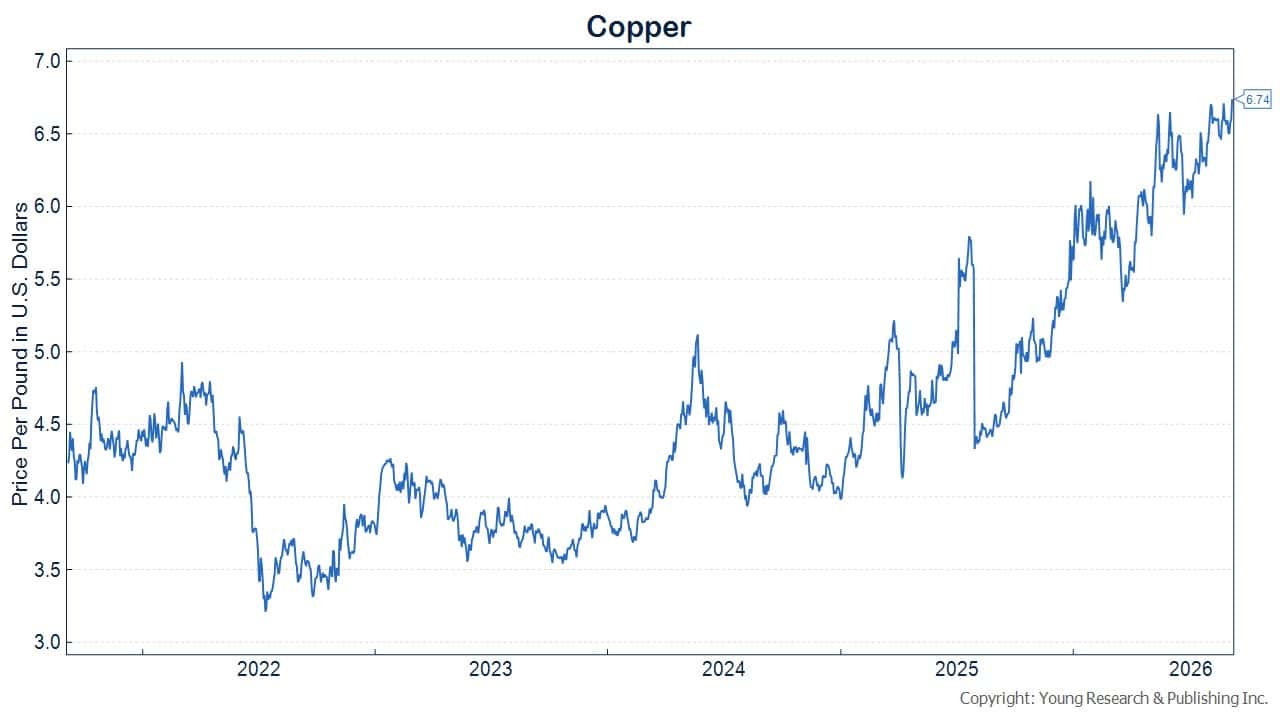
Tariff turmoil is adding another layer of uncertainty, prompting companies and traders to reposition copper supplies around the US market. Overall, tight supply, strong industrial demand, and shifting trade policies have pushed copper prices to unprecedented levels.
U.S. Copper Production Falls as Import Dependence and Demand Rise
The 2026 USGS Mineral Commodity Summaries report shows that copper remains a critical U.S. supply concern. U.S. mine production declined in 2025 to an estimated 1 million metric tons, down 5% from 2024, while copper continued to be widely used in building construction, electrical and electronic products, transportation, and other industries.
The United States relied heavily on foreign supplies, with net import reliance reaching 57% of apparent copper consumption in 2025. Copper recovered from scrap contributed about 30% of U.S. copper supply, helping reduce reliance on newly mined material.
These figures underscore the importance of domestic mining, recycling, and processing capacity in strengthening U.S. copper supply and reducing vulnerability to disruptions in foreign supply chains.