

Crack spreads measure how profitable it is for refineries to turn crude oil into products such as gasoline, diesel, and jet fuel. They are currently elevated because global gasoline supplies are tight due to refinery disruptions in Russia, China, and the Middle East.

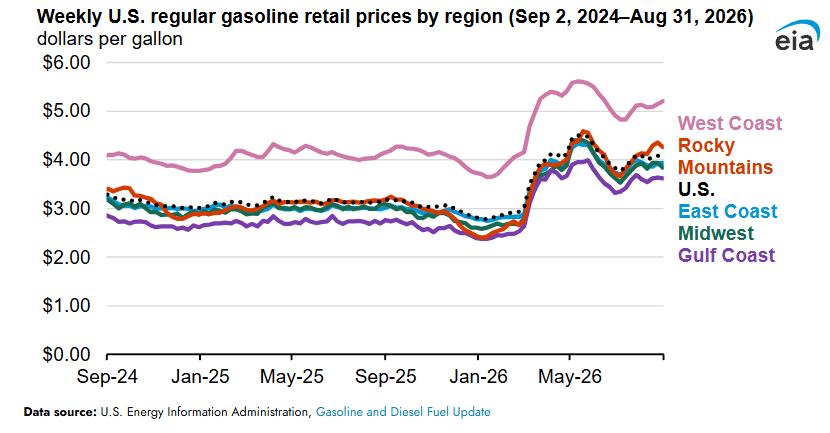
Gasoline prices vary across the U.S., with the West Coast having the highest average price at $5.21 per gallon and the Gulf Coast the lowest at $3.62 per gallon before Labor Day.