
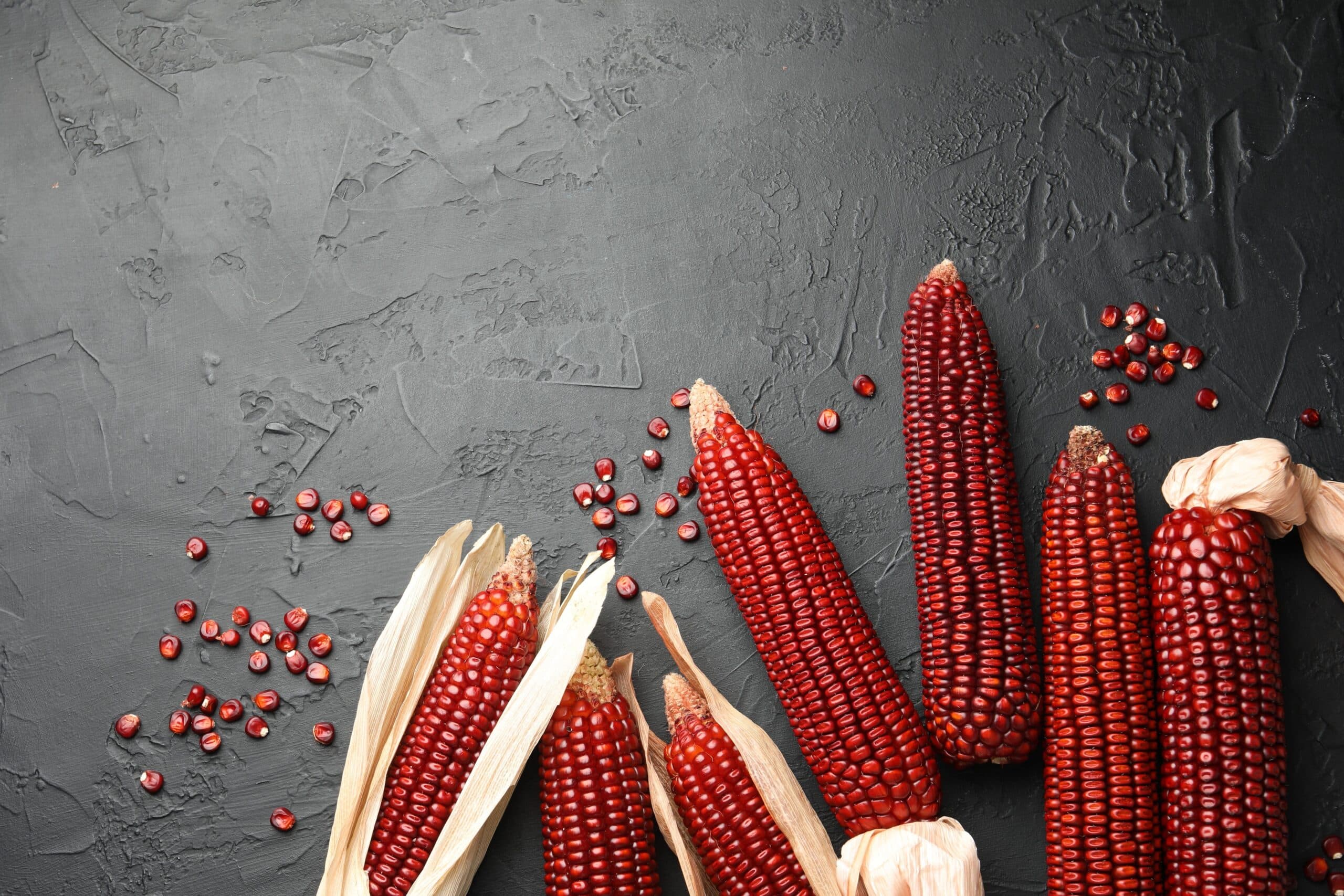
High Wire Distilling in South Carolina is redefining bourbon by focusing on the quality and heritage of its grain, reports Dylan Ettinger of Food & Wine. Founders Ann Marshall and Scott Blackwell use Jimmy Red, a near-extinct local corn, as the primary ingredient in their Jimmy Red Bourbon, treating whiskey-making like fine cuisine. Through partnerships with local farmers, they’ve expanded cultivation of Jimmy Red corn, paying premium prices to preserve its legacy. Since their first two-barrel batch in 2016, High Wire has grown production while maintaining a deep connection to Southern culinary traditions, creating a distinctive whiskey rooted in local heritage. Ettinger writes:
Without grain — corn, rye, barley — there would be no whiskey. Yet for many distillers, the actual grain is an afterthought; barrel aging and blending are seen as the sources of flavor. And the provenance of the grain is at best a minor afterthought.
At High Wire Distilling in South Carolina, founders Ann Marshall and Scott Blackwell both had backgrounds in fine cuisine and agriculture, and knew that for them, basic grains weren’t going to cut it.
By approaching whiskey the way a chef would a dish, they created Jimmy Red Bourbon, a spirit that reflects South Carolina’s rich culinary heritage through use of Jimmy Red corn, a near-extinct local variety. […]
Jimmy Red, the red-kerneled heirloom corn that Marshall and Blackwell chose for their whiskey, was once widely grown on James Island, south of Charleston, but it was nearly extinct. “Initially, there wasn’t enough for us to produce a single batch of bourbon,” recalls Marshall. “Glenn Roberts at Anson Mills was selling 5- to 10-pound bags to restaurants. He called us ‘grain hogs’ because we told him we needed 1,000 pounds of it.” […]
High Wire’s first, two-barrel batch of Jimmy Red whiskey came out in 2016, and the response was intense. “Both barrels sold out in about ten minutes,” says Blackwell. High Wire’s capacity has grown since then — today, Marshall and Blackwell have about 6,000 barrels of whiskey in their warehouse. […]
“The work becomes more and more important every year that we do it,” says Marshall. “And every barrel that gets filled is another victory.”
Read more here.