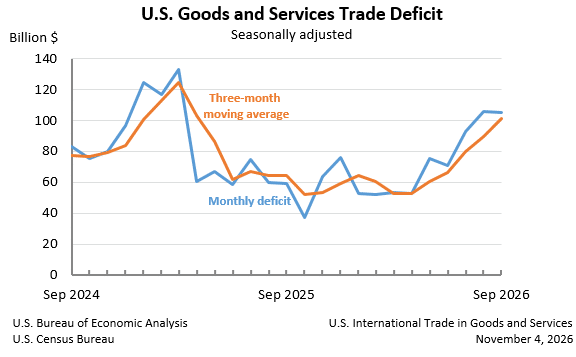
According to the Bureau of Economic Analysis (BEA), the U.S. trade deficit narrowed slightly in September 2026, falling 0.7% to $105.0 billion. Exports increased 1.9% to $321.5 billion, while imports rose 1.2% to $426.6 billion. Export growth was driven by capital goods, computers, aircraft, and agricultural products, particularly soybeans. Imports also increased, mainly due to higher purchases of computers and pharmaceuticals.
| Deficit: | $105.0 Billion | -0.7%° |
| Exports: | $321.5 Billion | +1.9%° |
| Imports: | $426.6 Billion | +1.2%° |
| Next release: Tuesday, December 8, 2026
(°) Statistical significance is not applicable or not measurable. Data adjusted for seasonality but not price changes Source: U.S. Census Bureau, U.S. Bureau of Economic Analysis; U.S. International Trade in Goods and Services, November 4, 2026 |
||
The BEA reported that the largest U.S. trade deficits were with Mexico, Vietnam, Taiwan, China, and the European Union. On a year-to-date basis, the trade deficit decreased by $92.4 billion (12.2%) compared with 2025, as exports grew 11.6%, outpacing the 6.2% increase in imports.
The report shows improvement in the U.S. trade balance, supported by stronger export growth. However, the widening three-month average deficit suggests continued pressure from imports. Moving forward, export competitiveness and global trade demand will remain important factors affecting the U.S. economy.