
Data center construction and high-tech investments, particularly in the US, are surging due to the AI boom, including technologies like ChatGPT, reports Satyam Panday and Paul Gruenwald of S&P Global. These investments—covering physical data centers, servers, cooling systems, and software—have shifted tech companies toward capital-intensive infrastructure, with the US accounting for over 40% of global capacity. They write:
Data center construction has exploded in the past few years. This is a global story, with the US in the lead. Data centers are part of a worldwide AI race turbocharged by the launch of technologies such as ChatGPT. This race has multiple dimensions, spanning economics, geopolitics, energy and technology. In a macro context, data center and related high-tech business investment has implications for growth and labor demand, and ultimately productivity. […]
While the AI race is global, the US is leading the data center story so far. This reflects both the scale of investments to date and the computing capacity necessary to run large language models. S&P Global 451 Research estimates that US data center capacity represents over 40% of the global total, and that figure is projected to continue growing. Asia-Pacific follows, with Europe a distant third. […]
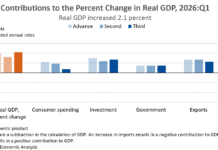
Data centers and related high-tech investment activities have already become a key driver of US growth. Adding up the components outlined above, current estimates suggest that 80% of the growth in final private domestic demand — GDP less net exports, government and inventory — in the first half of 2025 came from data centers and high-tech-related spending. This development is quite astounding. […]
GDP growth is ultimately driven by changes in the labor force and changes in productivity. So, the key question is: Will data center investment strategies translate into sustained gains in productivity? And will any gains in productivity come with an augmented labor force or a reduced one? As noted above, there are hints of productivity gains already, but the final word will not be clear for years. […]
AI powered by data centers holds great promise, but its effects will not be uniform. This will be true across sectors and across types of workers. For example, in contrast to the prevailing dynamics of globalization, some categories of professional workers appear likely to be negatively affected by AI. The role of labor and wage growth in an AI-enabled economy is therefore a key development to monitor. Public support for AI adoption will likely wane if distributional issues, along with equally important considerations such as governance and trust, are not adequately addressed.
Read more here.