Coal-powered industry and electricity generation for centuries, but its dominance has steadily declined in the United States as natural gas has become cheaper and cleaner. Coal’s share of US electricity generation has fallen from more than 50% in the 1980s to about 16% today, leading to the retirement of more than 200 coal plants since 2008 and the conversion of roughly 140 others to natural gas, according to Construction Physics.
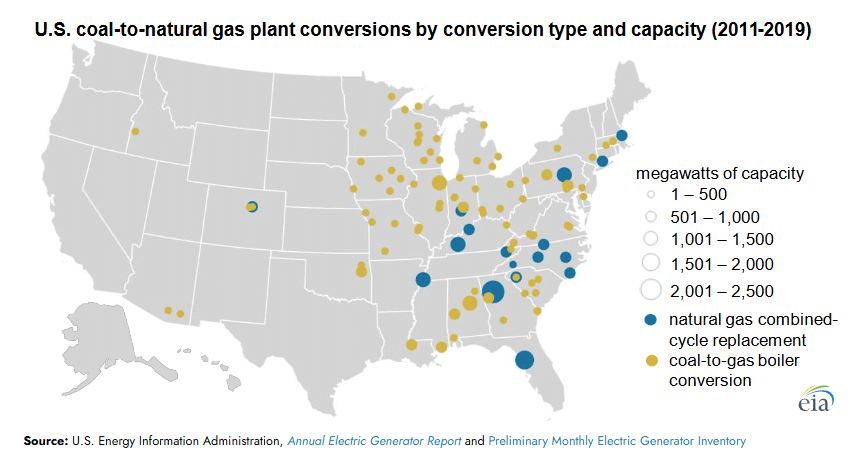
The shift was driven largely by two factors: stricter environmental regulations, particularly the EPA’s Mercury and Air Toxics Standards (MATS), and the shale gas boom, which made natural gas abundant and inexpensive. Rather than investing in costly emissions controls for aging coal plants, many operators found it more economical to convert them to burn natural gas.

Coal-to-gas conversions range from modifying existing boilers to burn gas to completely replacing coal-fired equipment with modern combined-cycle natural gas plants. While these conversions helped extend the life of some facilities and reduce emissions, the trend is expected to slow as most viable plants have already been converted, renewable energy and battery storage continue to expand, and fewer coal plants remain in operation.