
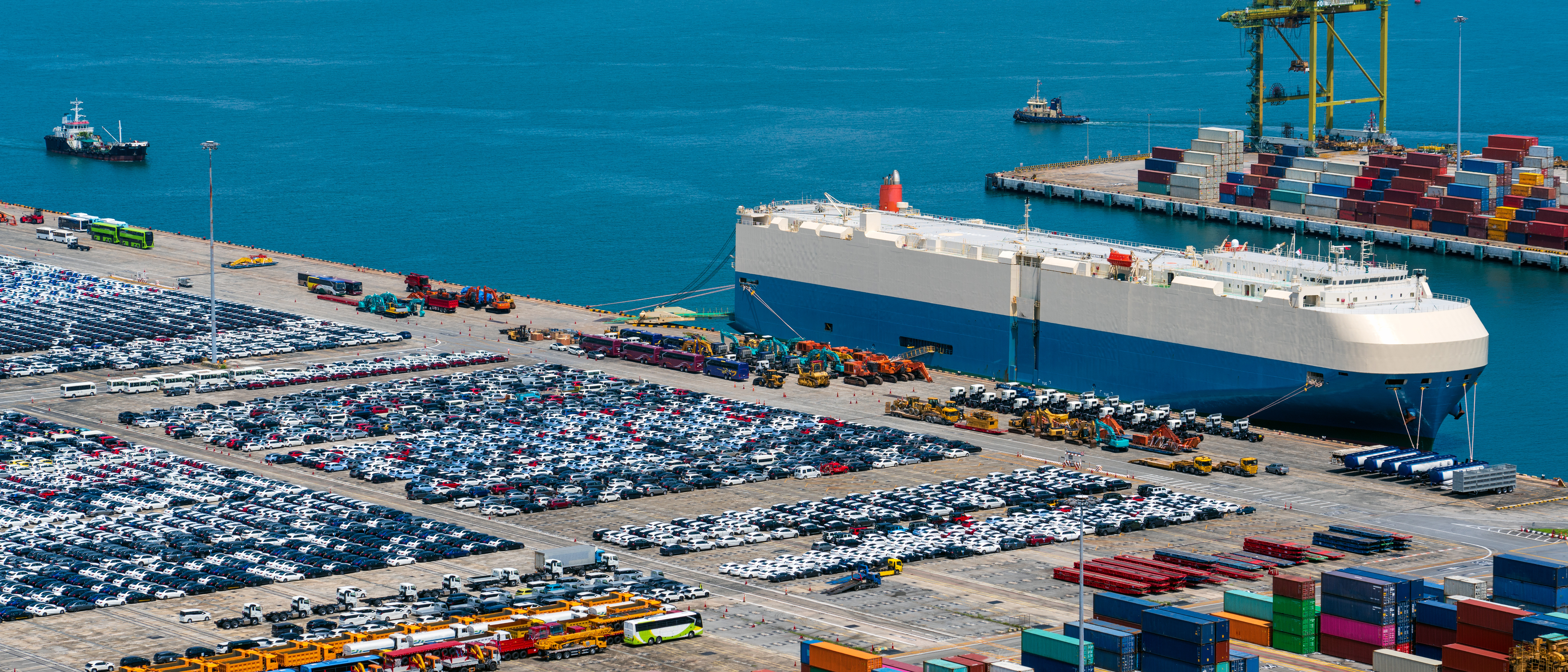
Jason Douglas of The Wall Street Journal tells his readers how strong car sales contrast with weakness in other exports. He writes:
Auto exports from Europe and Asia are surging as the U.S. and other countries lavish subsidies on electric vehicles and dealers replenish inventories that even now aren’t back to prepandemic levels.
The boom in autos contrasts with broader weakness in exports as the global economy slows. The trend offers a glimpse of how the West’s embrace of industrial policies aimed at stimulating domestic manufacturing and reducing the use of fossil fuels is causing wrinkles in patterns of world trade.
In Germany, Europe’s industrial powerhouse, manufacturers exported around 2.6 million new passenger cars in the 10 months through October, up 22% year over year, according to the German Association of the Automotive Industry.
South Korea and Japan have seen auto exports accelerate, in part thanks to U.S. tax breaks for electric cars. China earlier this year became the world’s biggest auto exporter, vaulting over Japan thanks to sales to sanctions-hit Russia as well as exports of EVs from both homegrown manufacturers such as BYD and foreign brands such as Tesla. […]
The big question is how long the boom will last. Economists say the postpandemic restocking effect will probably fade soon. The U.S. economy is expected to slow in 2024 as the effect of interest-rate increases bites. Europe is also expected to lose steam, if not tip into recession.
“There is a risk that Asian auto-shipments may cool over the coming year,” said Frederic Neumann, chief Asia economist at HSBC. He added that Chinese electric-vehicle exports, though, will likely continue to gain global market share thanks to the economy’s “stupendous” production capacity.
Broader trade signals from Asia, such as companies’ export order books, suggest global trade “is likely to remain under pressure for quite some time,” Neumann said.
Read more here.


